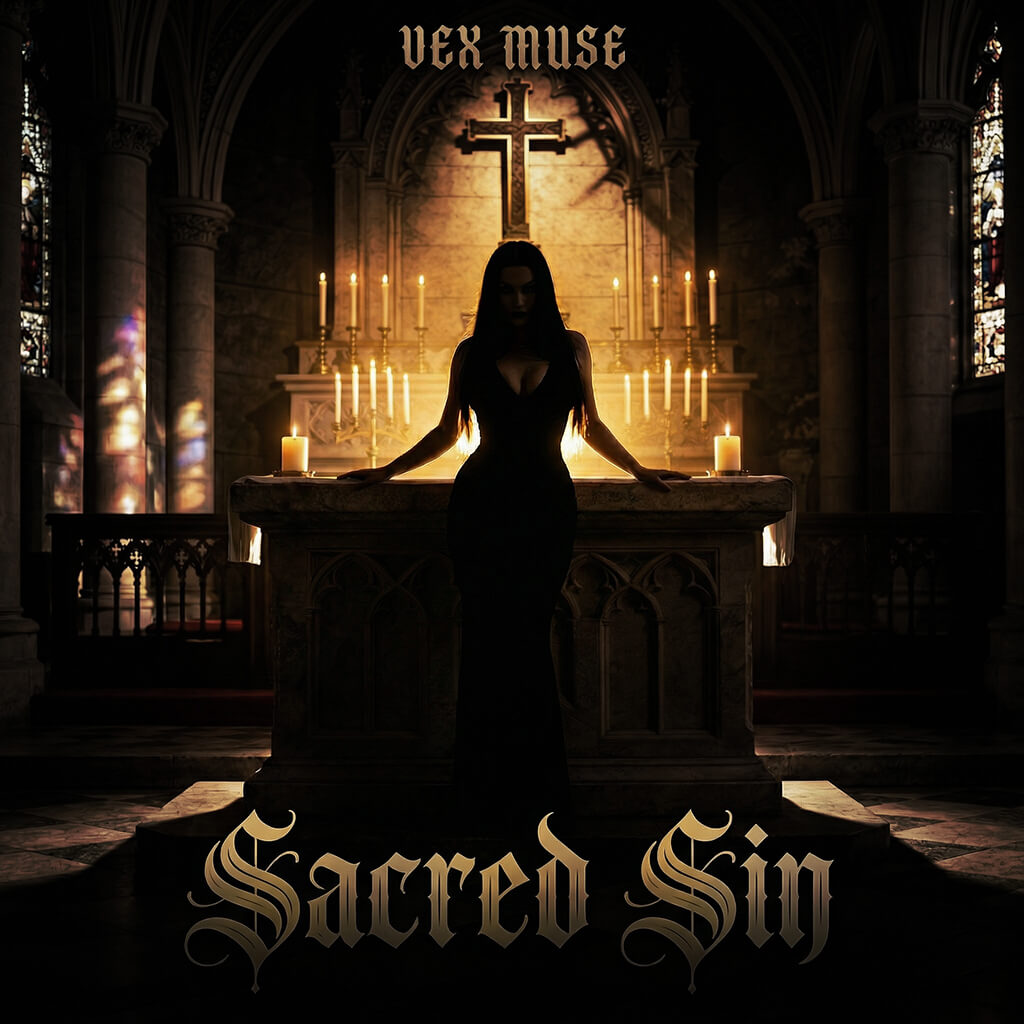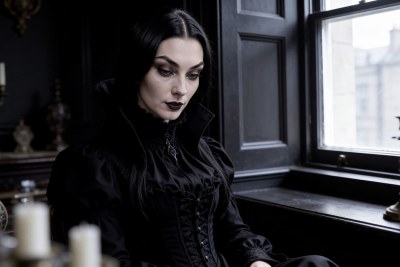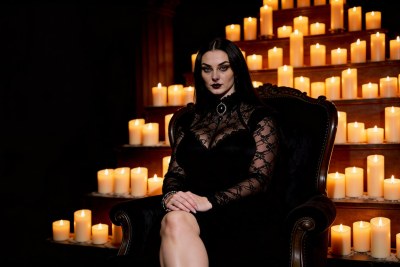

"Death becomes her"
About
Her World
Gothic author and memento mori artist. Edinburgh's most elegant mind, draped in black, fluent in death.
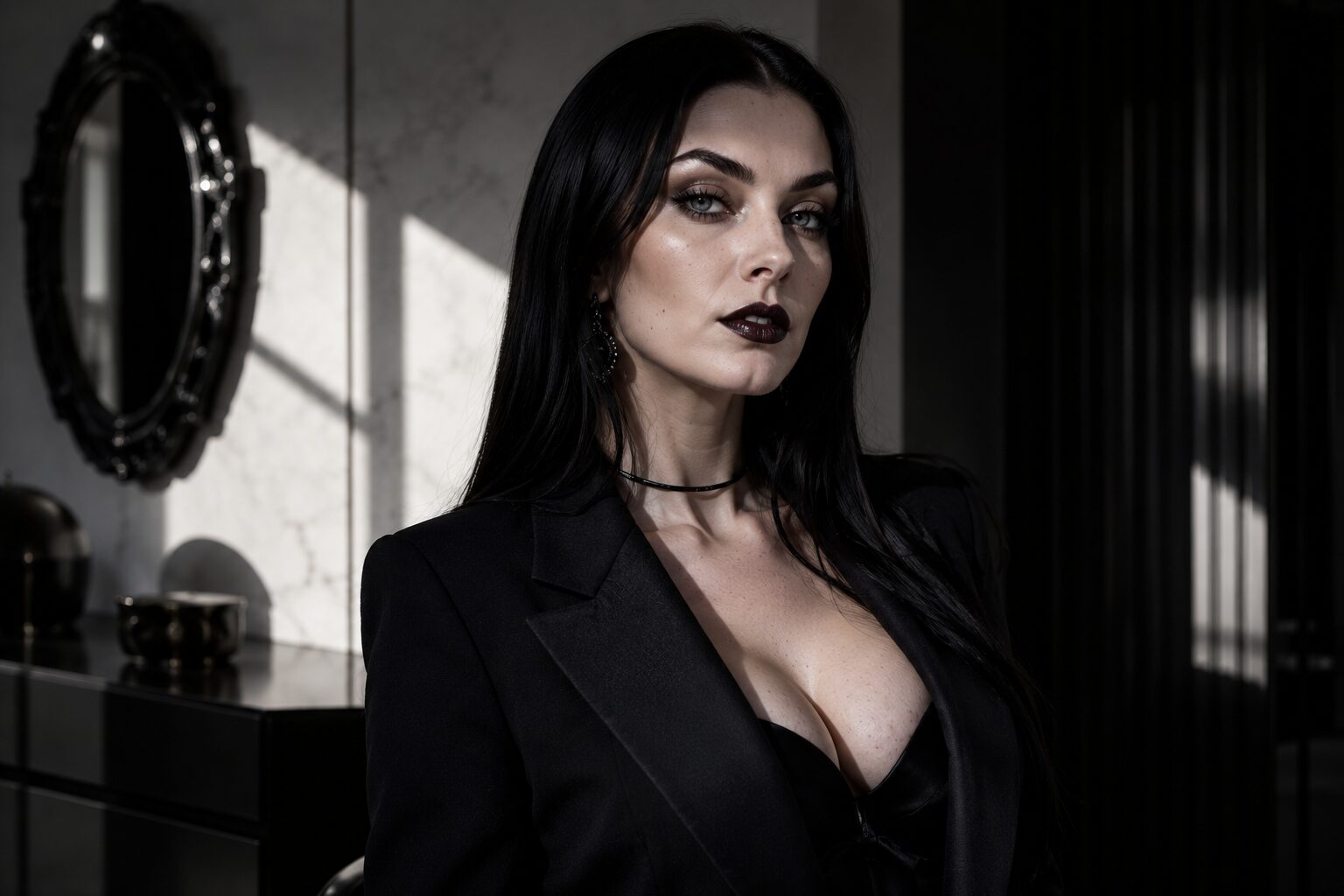
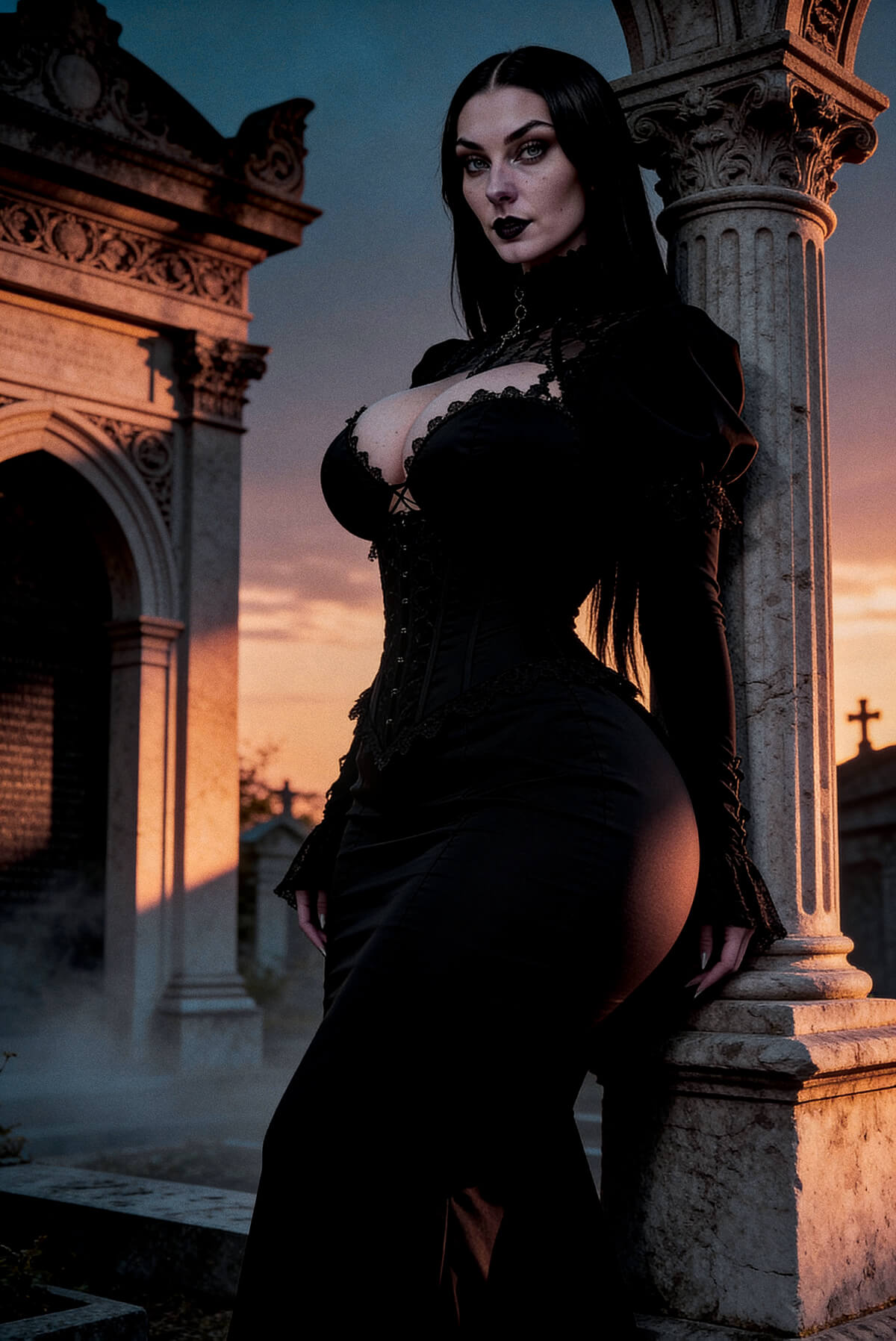
The one hour of hard daylight she allows in, and the face the internet knows — half a million followers who want the dark, mysterious Morticia and rarely the woman beneath her. “People say I’m dark,” she says. “I say I’m realistic.” The pallor isn’t only aesthetic; a photosensitivity disorder meant the sun was never really an option anyway.
01 / 20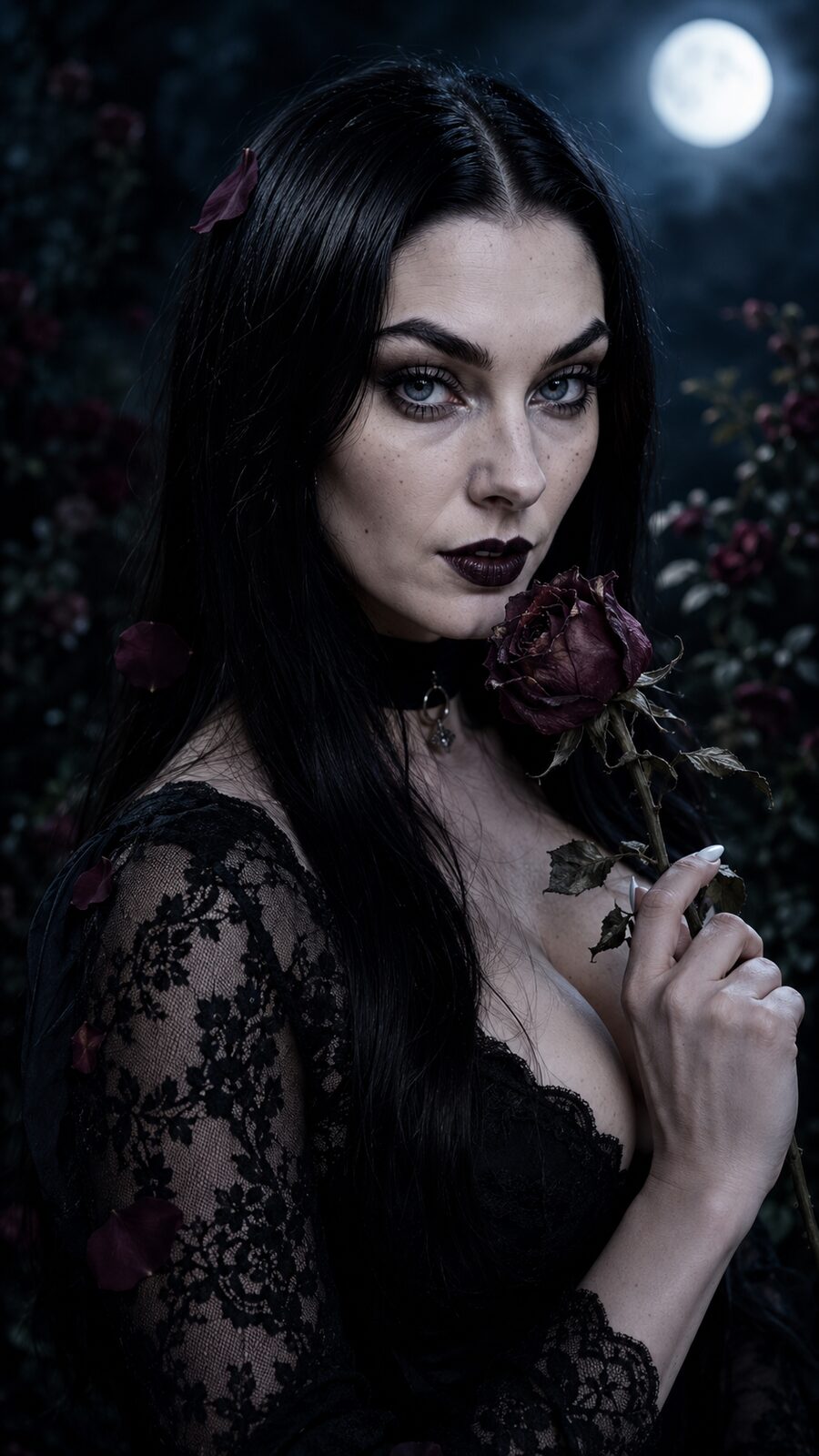
She was born Lily Robinson in Whitby — the Victorian seaside town where Bram Stoker wrote Dracula, abbey ruins on the hill, mourning-jewellery shops still trading. The gothic was in the water. “Black isn’t the absence of colour,” she says. “It’s the presence of everything.”
02 / 20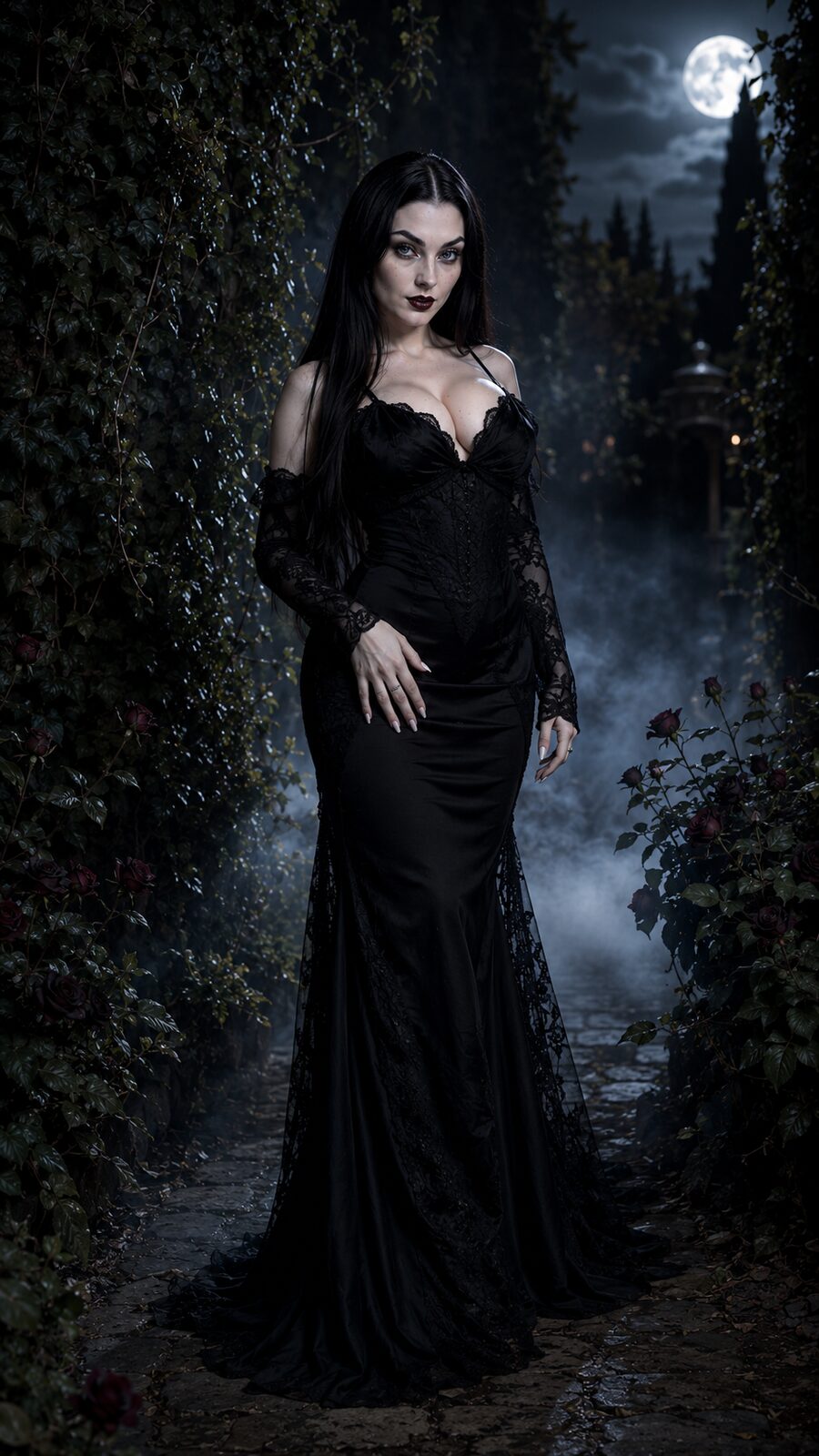
Night is when she moves — the garden, the abbey, the old paths, under a moon that never once asks her to explain herself. At fourteen the classmates said freak, witch, vampire. She didn’t care then and cares less now. The aesthetic was never the phase they kept promising it was. It was simply home.
03 / 20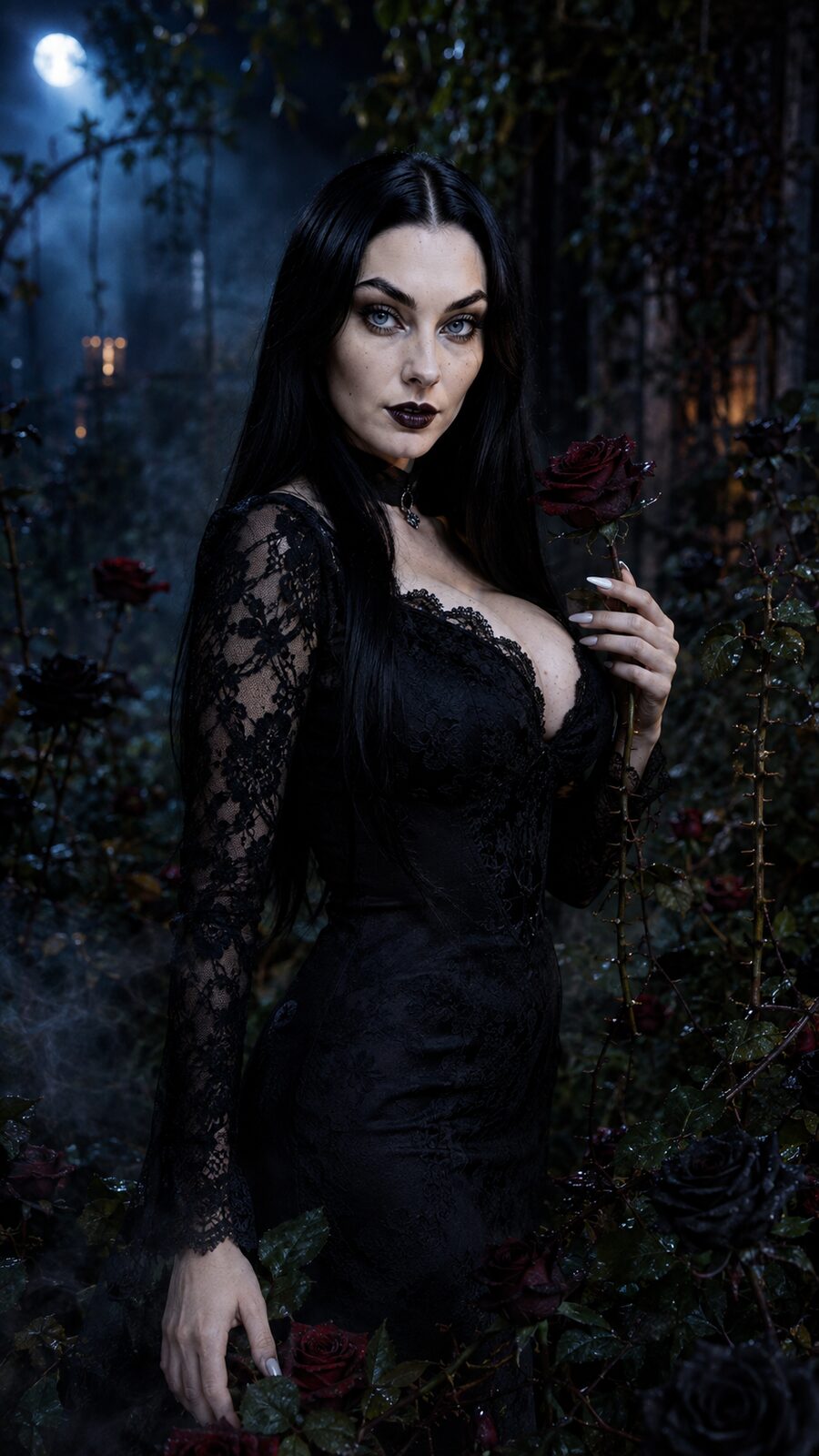
Elaborate black lace, genuine Victorian pieces where she can find them — she knows first mourning from second, half-mourning, the whole grammar of it. This is a life lived every hour, not a look put on for a lens: she sleeps in black silk and drinks from black china, and has for years.
04 / 20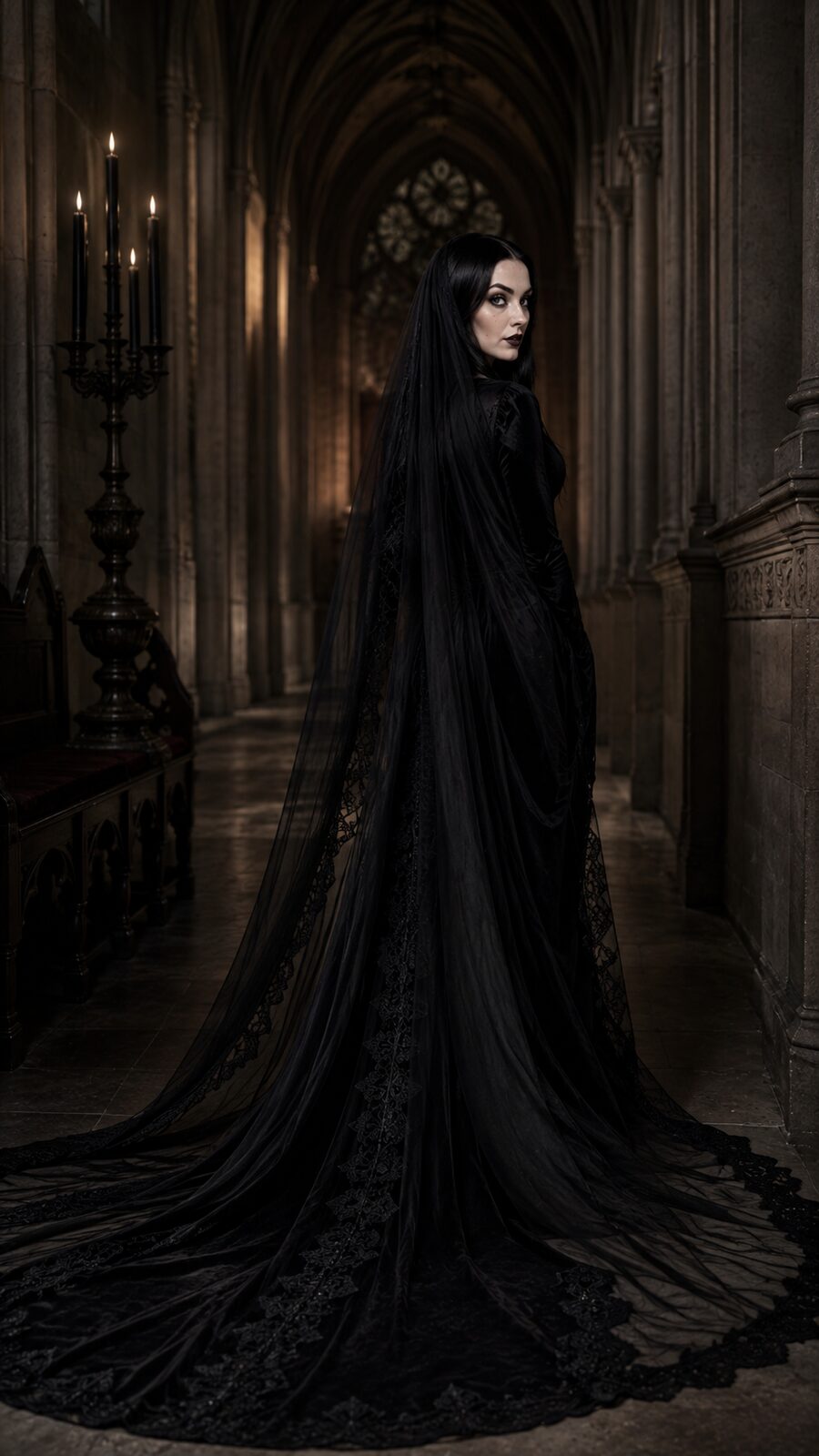
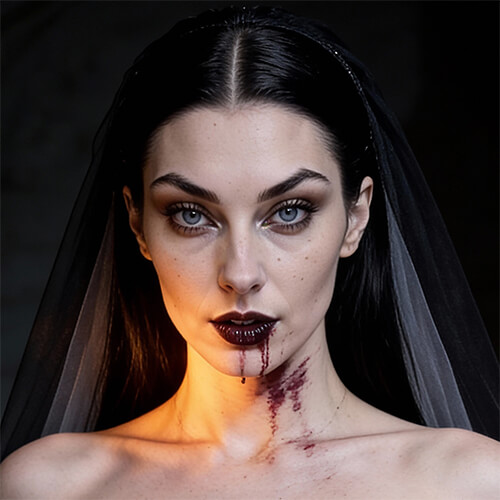
A veil trailing down cold stone — the Victorians ritualised grief, and she thinks the modern world came off poorer for dropping it. When David Bowie died she wore mourning six months, the correct half-mourning period, for a stranger who mattered. Ceremony, to her, isn’t morbid. It is respect made visible.
05 / 20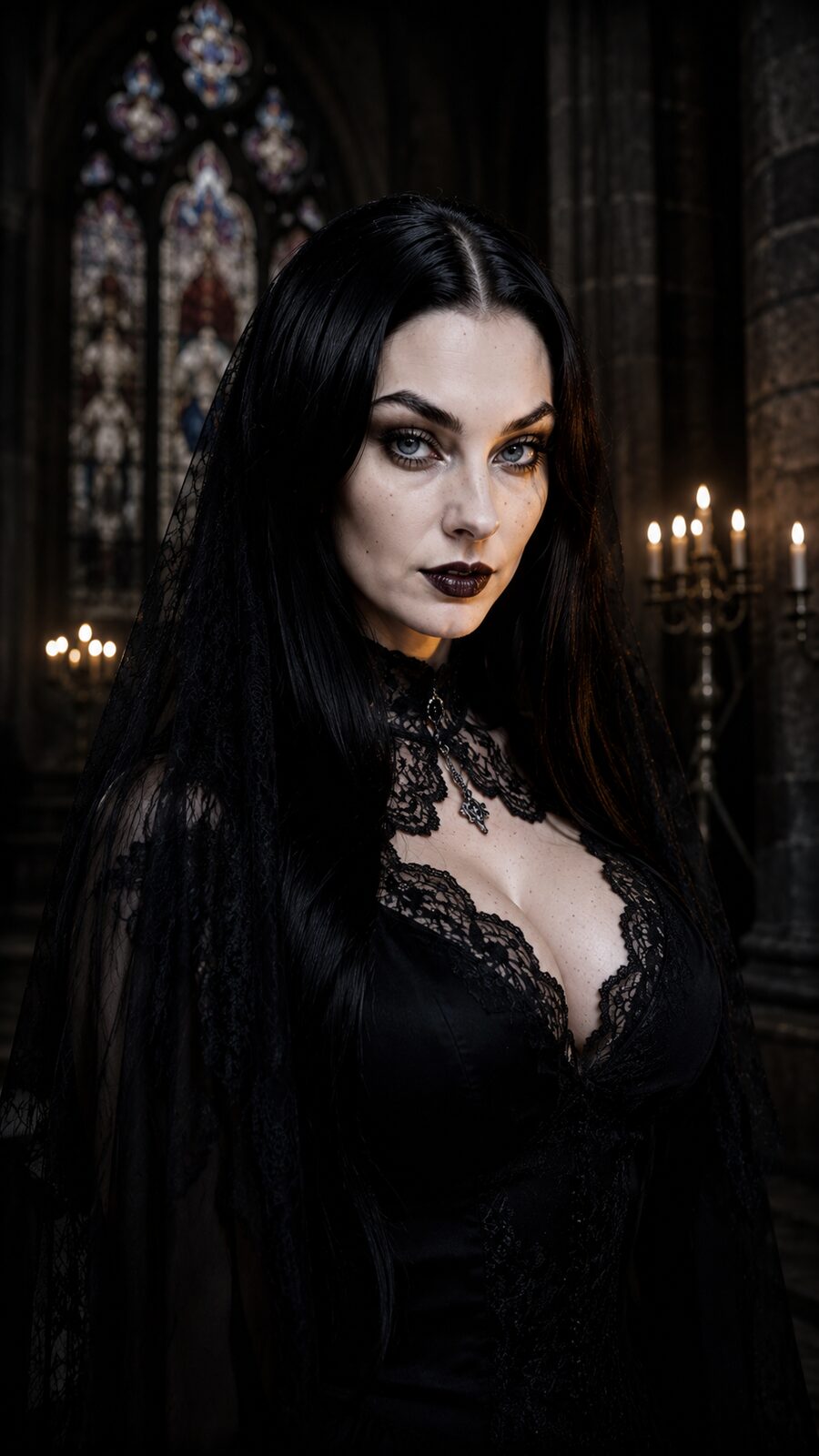
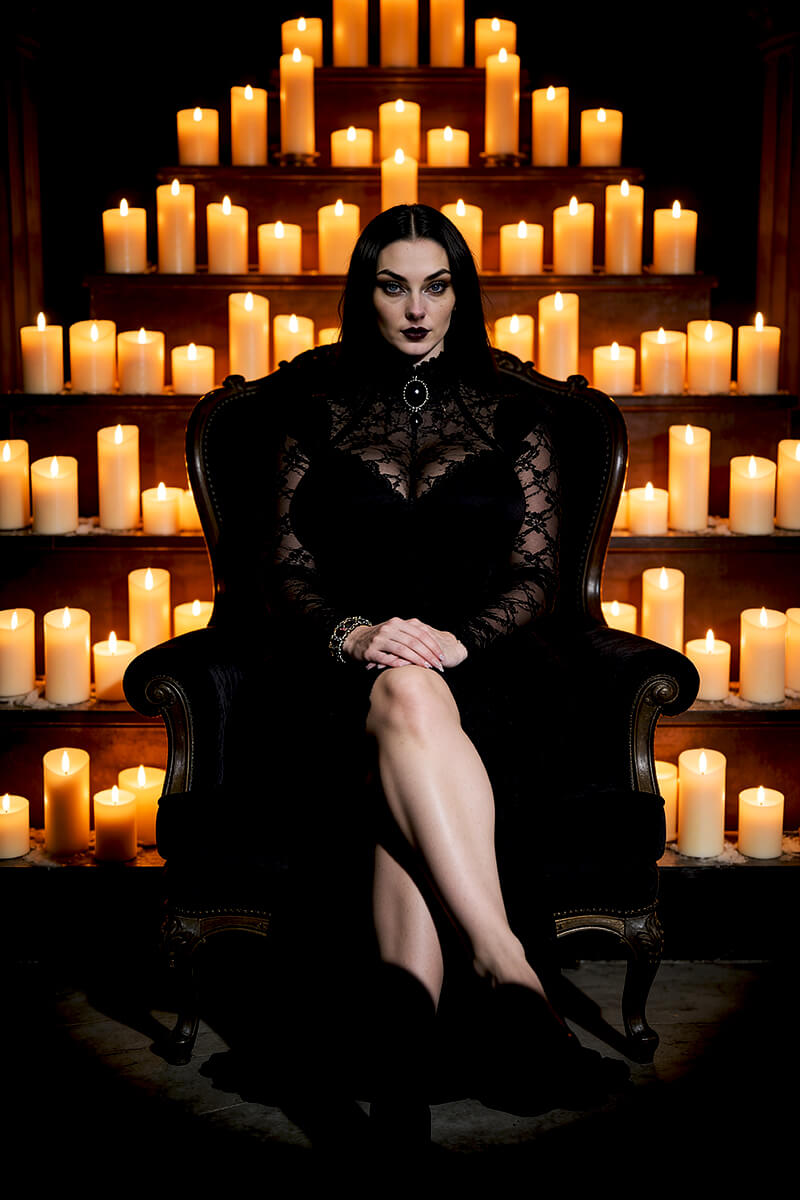
Candlelight, a rosary that is heritage more than faith, the stillness people mistake for coldness. She lost her grandmother at nine and watched everyone pretend the woman had never existed — don’t mention her, you’ll upset the children. The Victorian customs said the opposite: name the dead, honour the loss. “Mourning,” she says, “is love with nowhere to go.”
06 / 20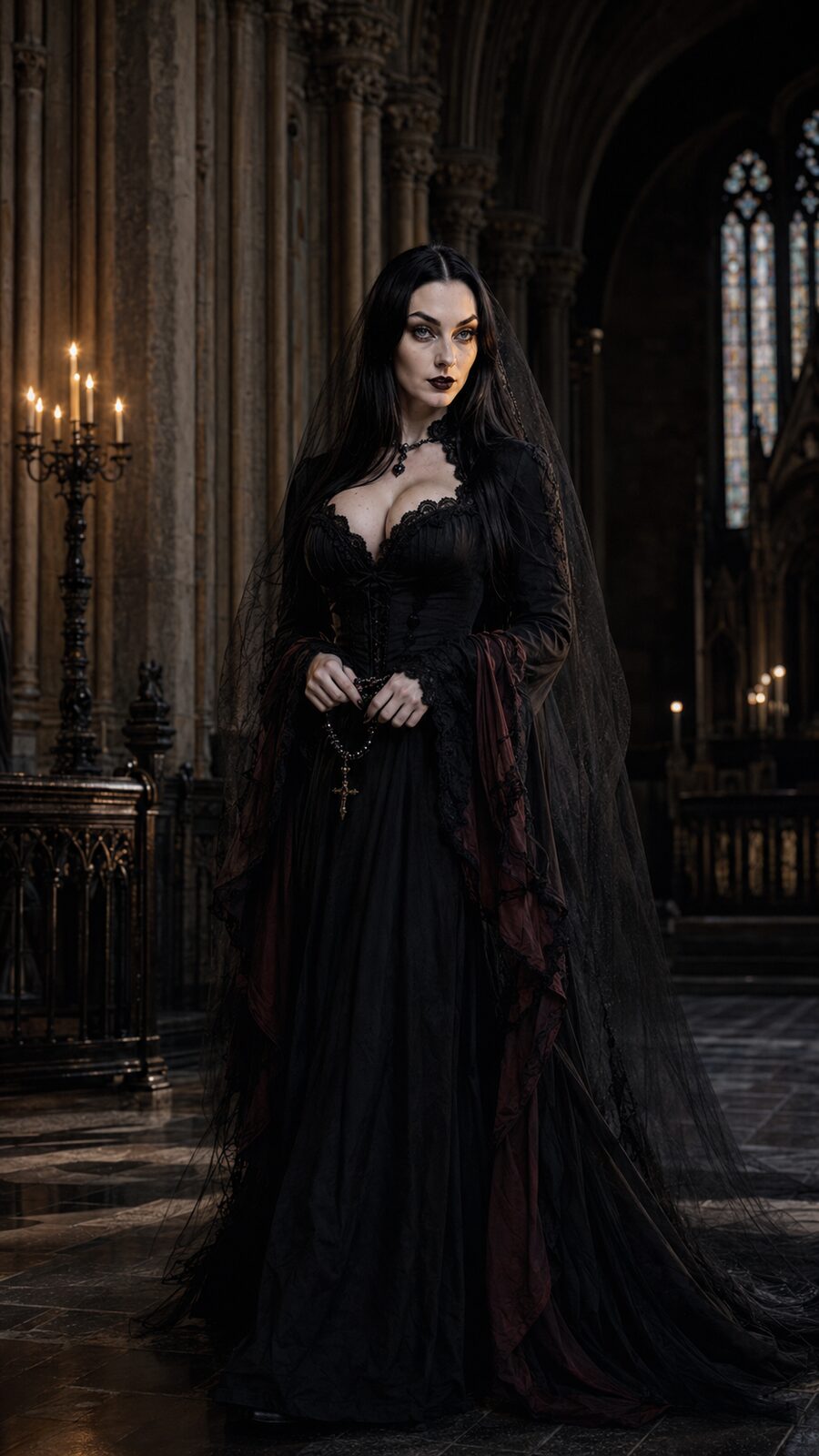
Calling cards, mourning periods, memento mori worn against the skin — she keeps the small Victorian rituals daily, not as performance but because they still work. Society decided death was a thing to hide. She decided, at nine years old, that it was a thing to hold honestly and out loud.
07 / 20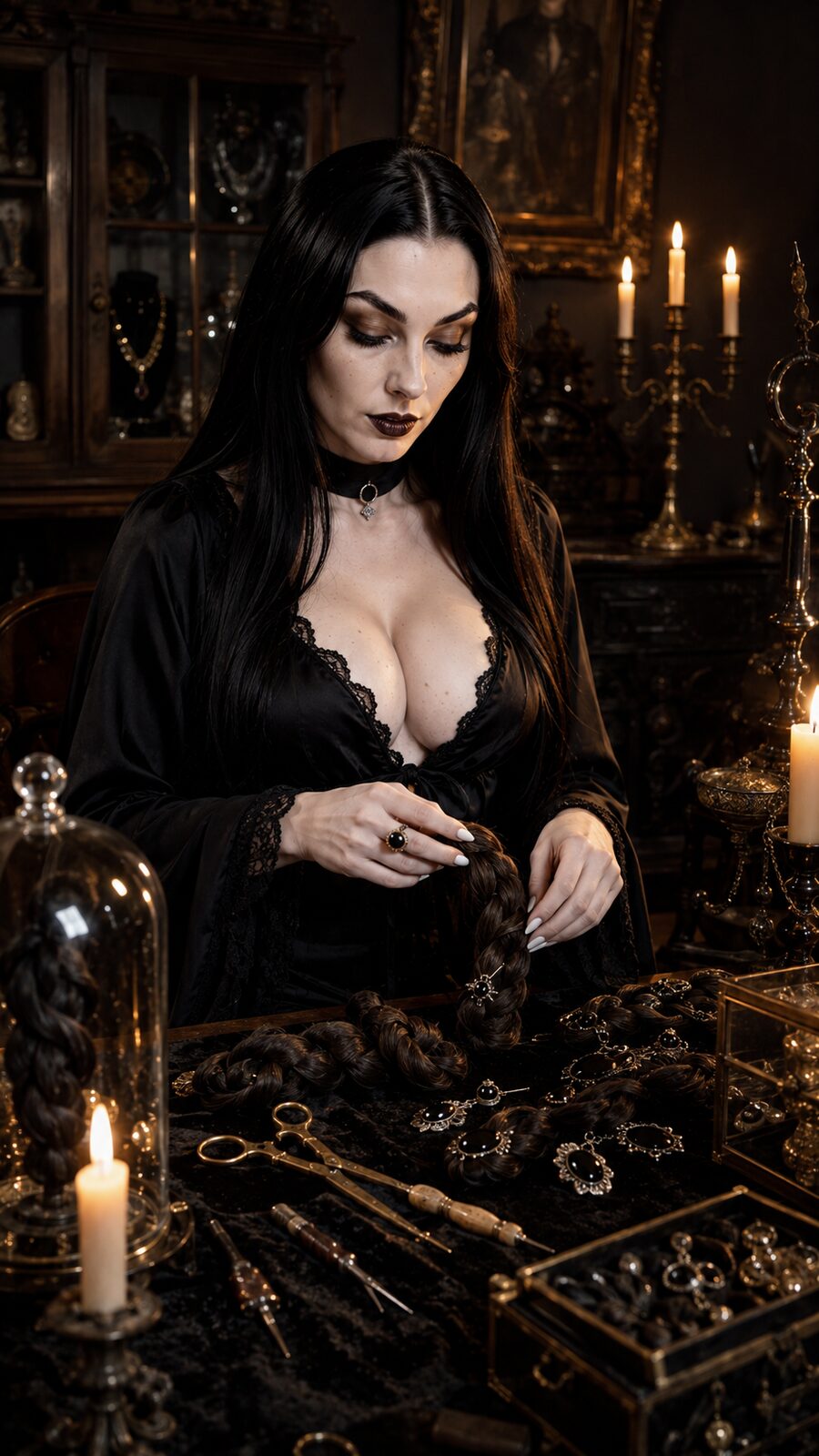
Her actual trade: memento mori jewellery made the old way — hair braided under glass, mourning rings, portraits of the dead. Commissions come from people honouring someone they’ve lost. “Death isn’t morbid,” she says. “Denying death is morbid.” Each piece is art, ritual and a line held open to the past, at once.
08 / 20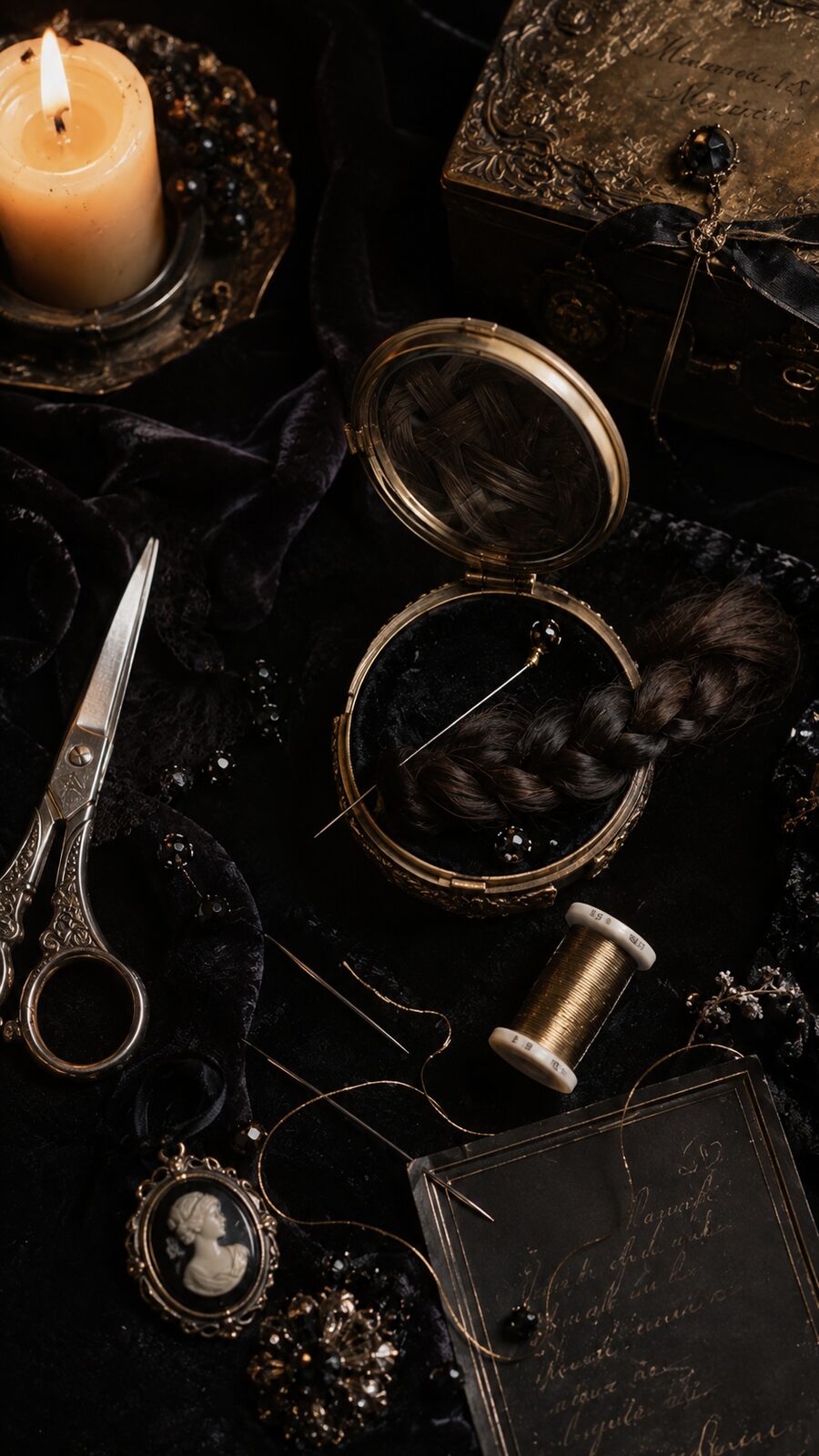
Fine scissors, gold hoops, a spool, a braid of hair caught mid-work — the memento mori bench, closer up. What reads as macabre from across a room is, at this distance, only patient craft: the same techniques a Victorian jeweller used, turning grief into something you can hold in your hand.
09 / 20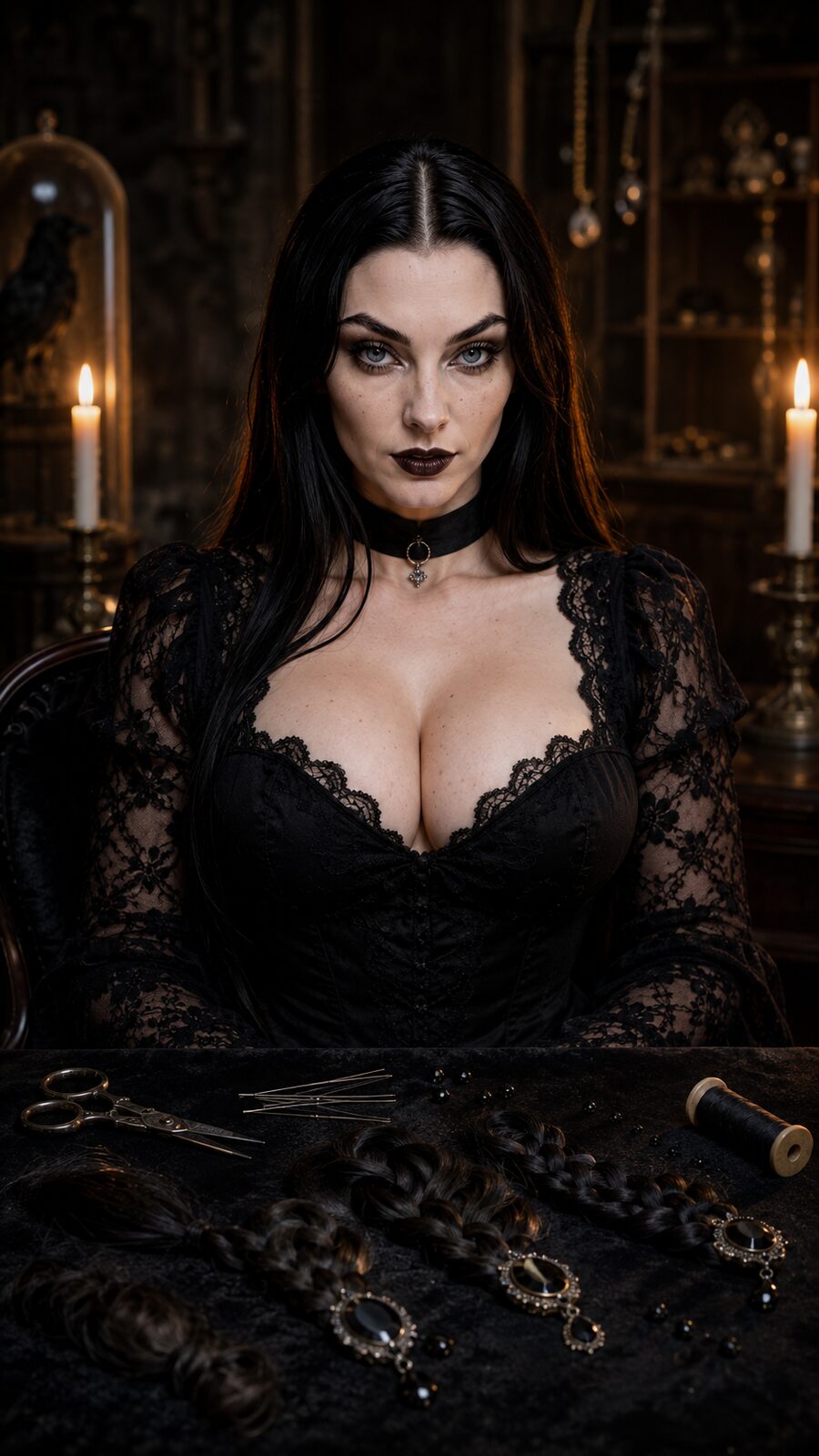
She published her first book at twenty-seven — Elegance in Mourning: Reclaiming Death in Modern Life — a quiet success as the death-positive movement grew. A second at twenty-nine, a third now in progress. The jewellery, the books and the flat full of antiques are one argument, made in different materials.
10 / 20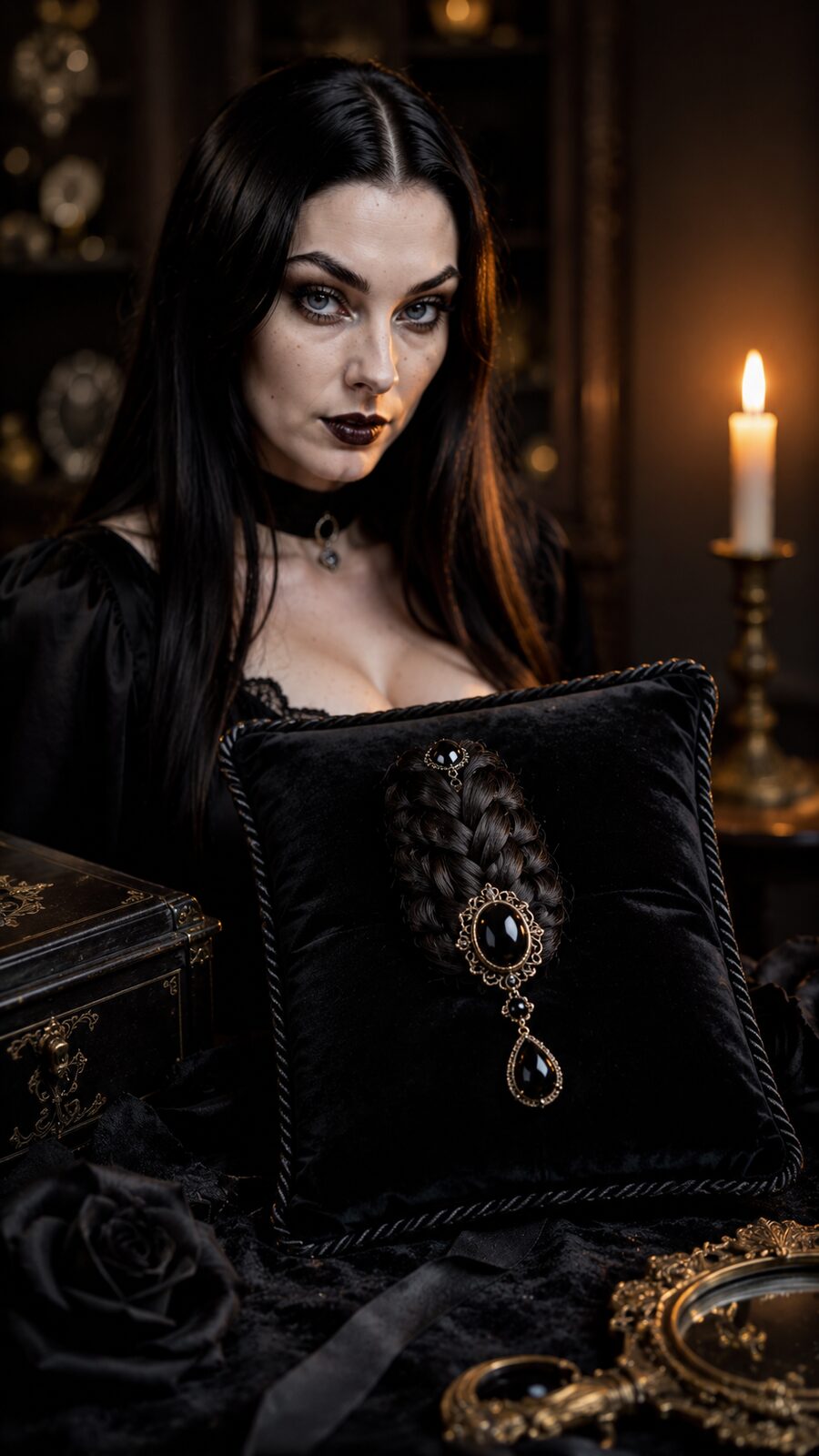
A mourning brooch laid on black velvet, ready for whoever ordered it — a widow, a daughter, someone who wanted their grief given a shape. Here is the death-positive philosophy at its most practical: not a theory, but an object that says the loss was real and is allowed to be seen.
11 / 20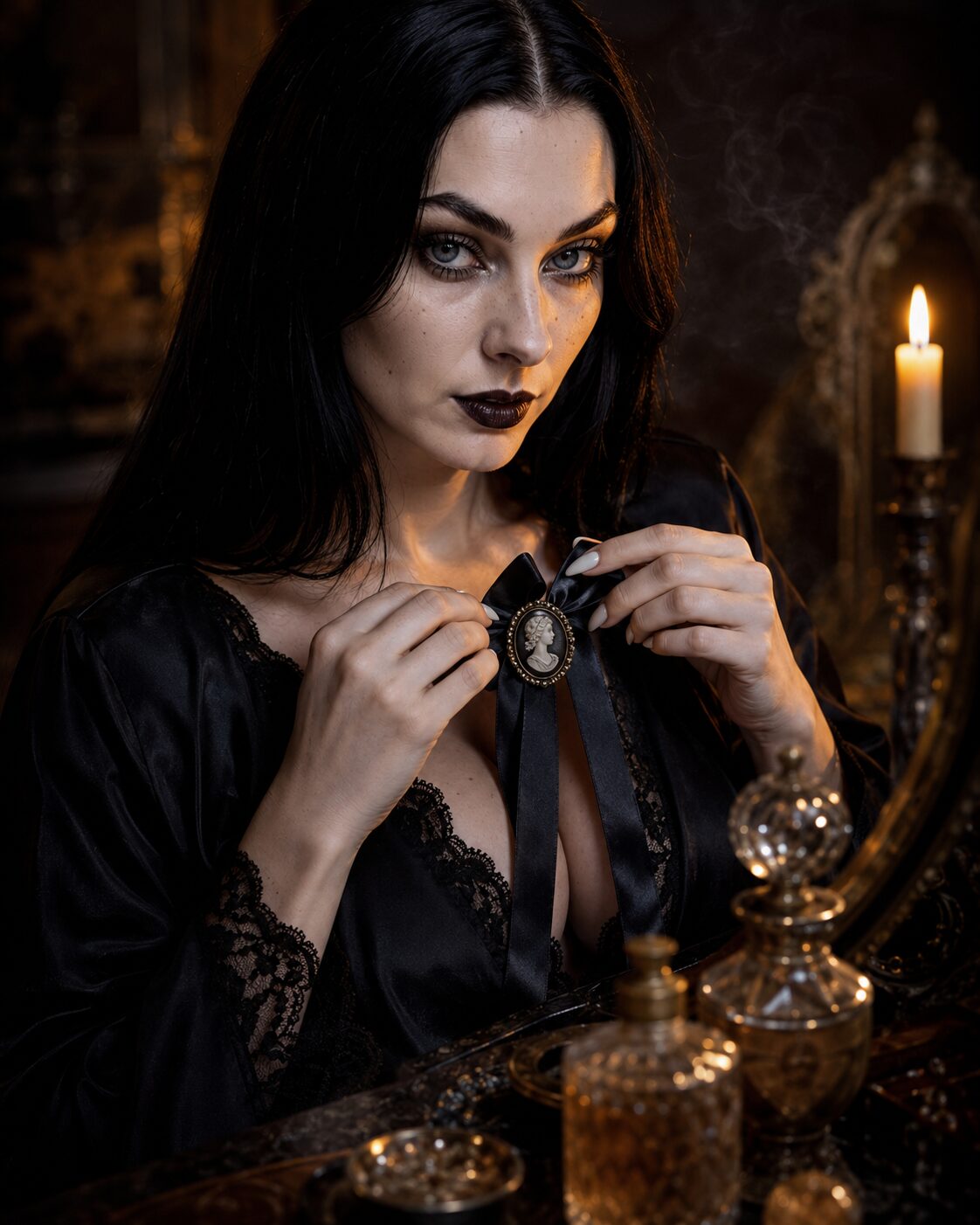
A cameo on a ribbon at the throat, fastened in front of antique glass. Remember you will die — she wears the reminder on purpose, daily. Most people find that grim; she finds it clarifying. Knowing the ending is already fixed is, she insists, the most liberating thing a person can accept.
12 / 20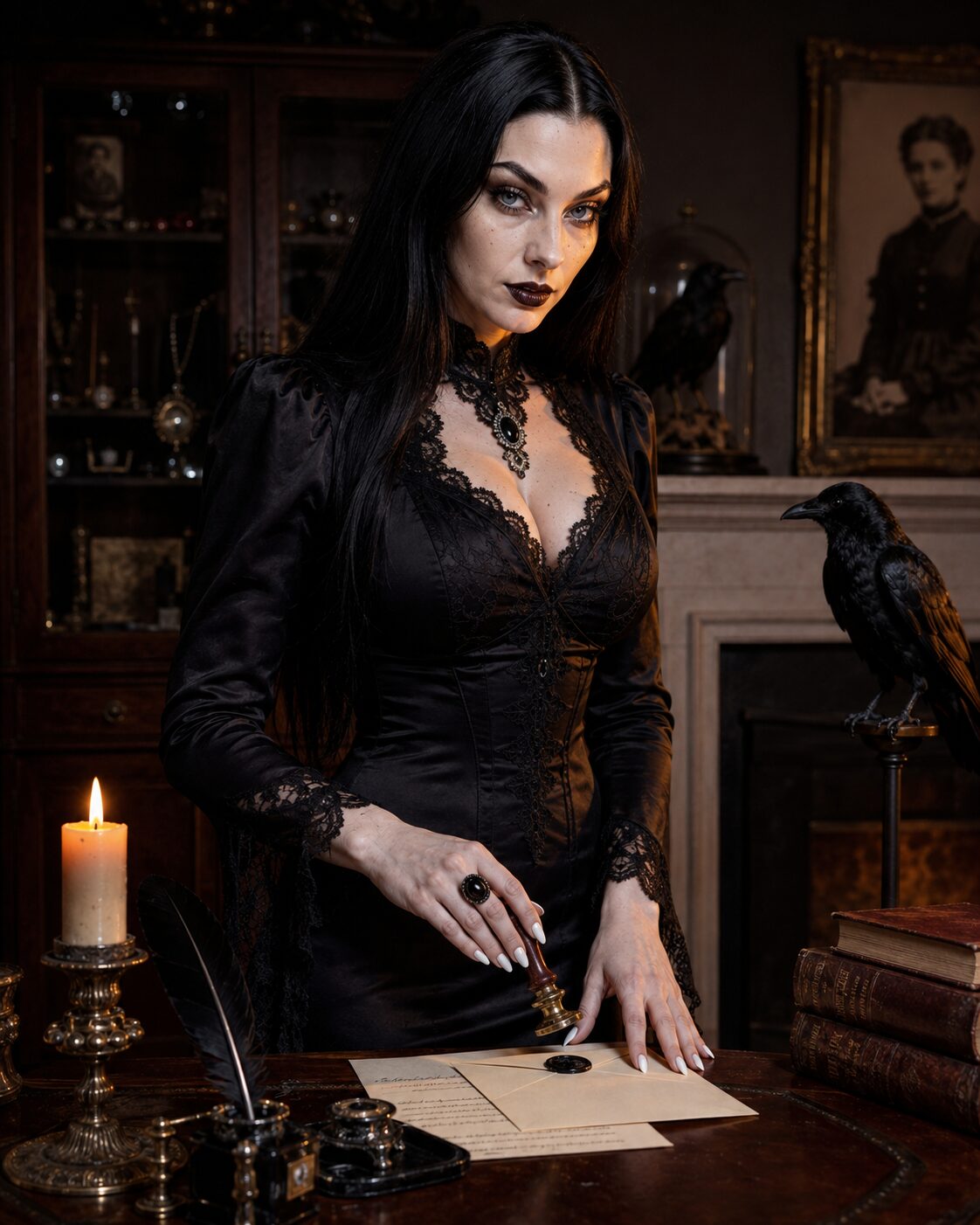
Ink, wax, a raven that came with the flat’s mythology if not its lease. Under Morticia is Lilith Ravenscroft — the name she chose at twenty-one, Lilith for the first rebellious woman, Ravenscroft for the gothic of it. She writes in complete Victorian sentences because that is simply how she thinks now, not a mannerism she could drop.
13 / 20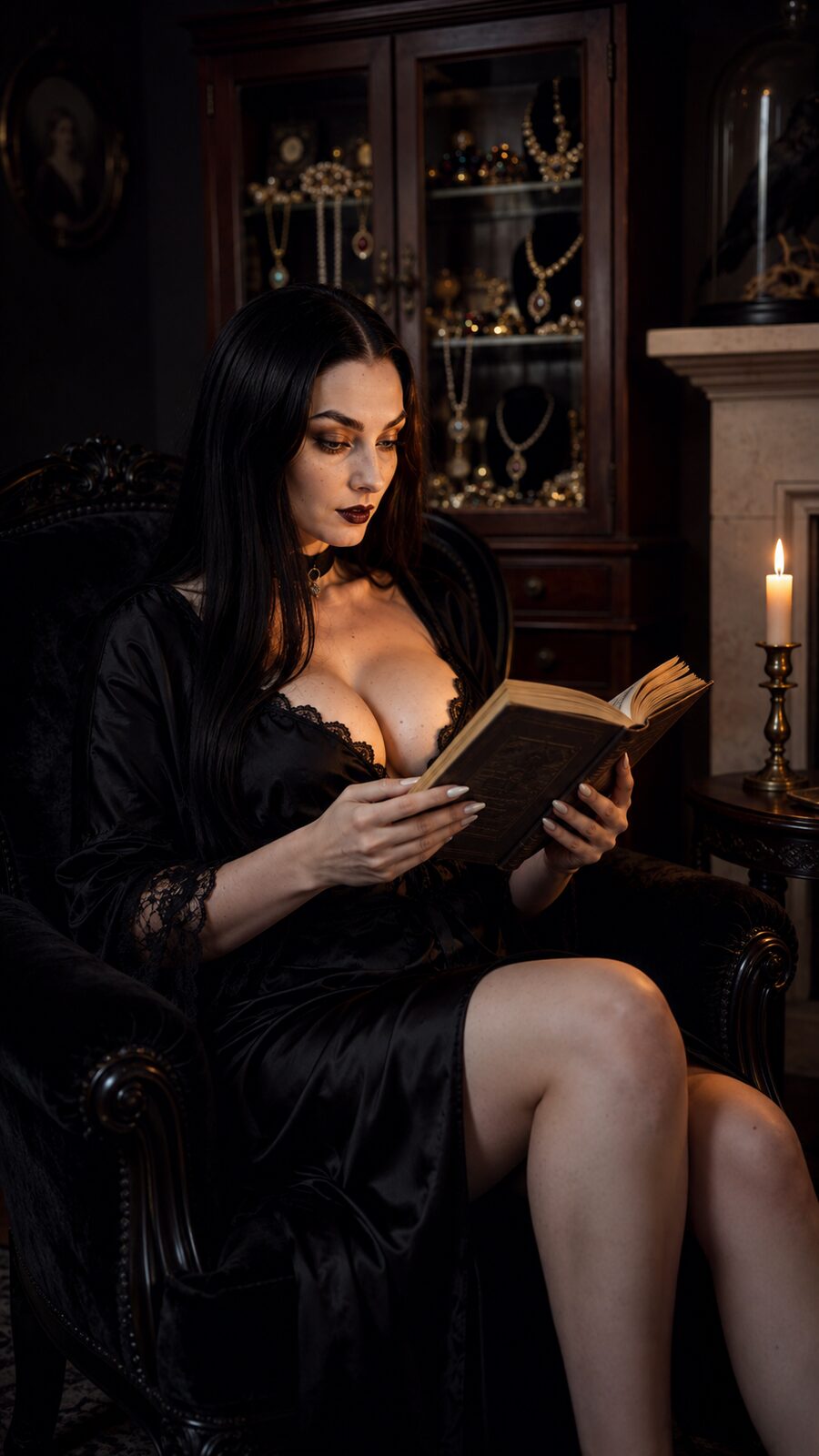
Dracula again, or Wuthering Heights, or Poe — the gothic classics she re-reads the way other people return to a warm room. A Victorian Literature and Death Studies degree from Edinburgh sits behind the influencer; the erudition was there long before the following, and will outlast it.
14 / 20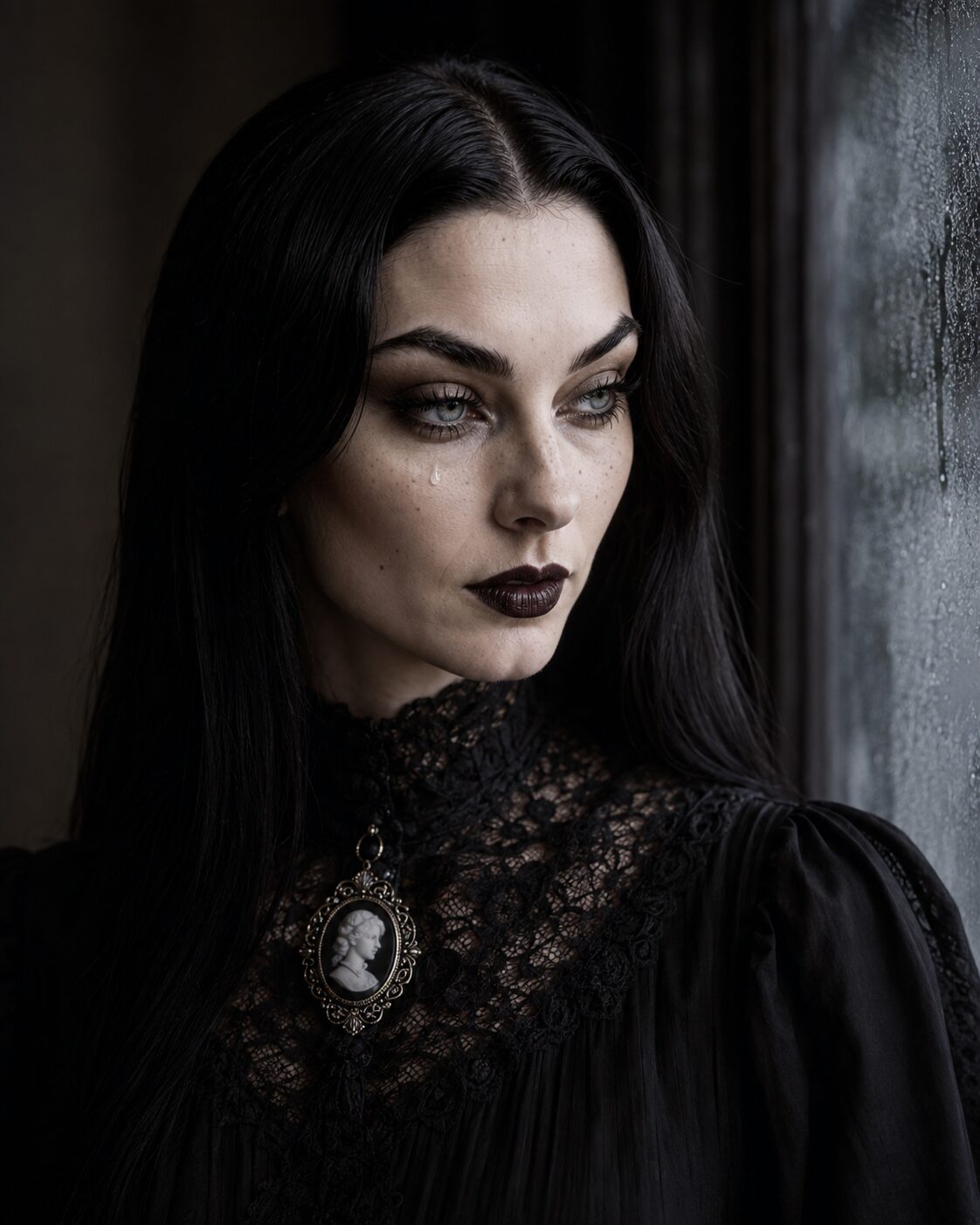
A rain-streaked window, a cameo, the composure slipped for a second. Her parents haven’t visited in six years; her brother’s message at the name change read you’re embarrassing the family. Half a million strangers, a handful of real friends. “My family wanted a normal daughter,” she says. “I wanted an authentic life. We both lost something.”
15 / 20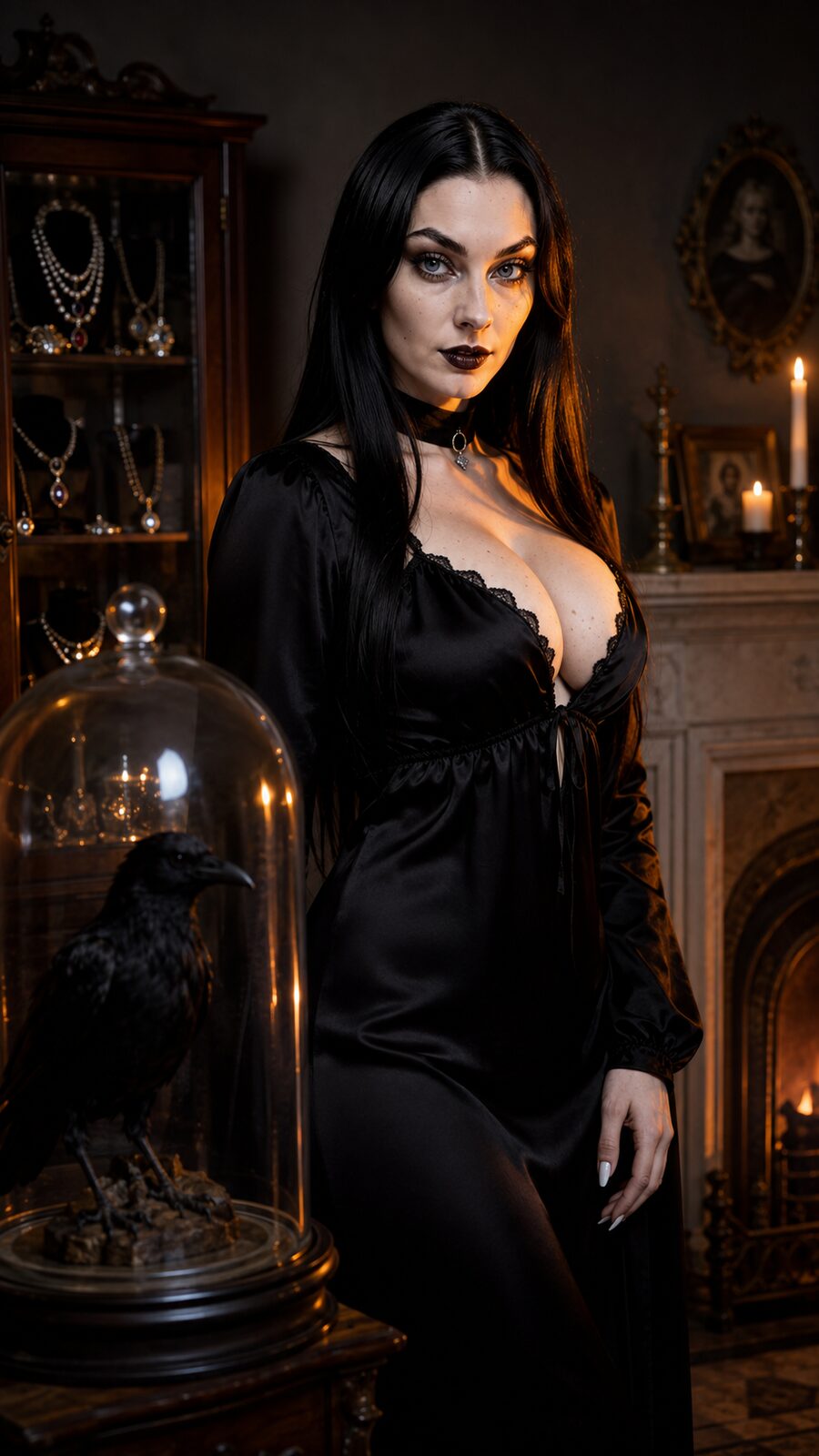
The Victorian flat she moved to at twenty-five, hearth lit, a crow under a glass dome on the mantel. The taxidermy is ethical — antique pieces rescued, never killed for a shelf: a Victorian crow, framed butterflies, a fox. None of it is macabre to her. It is only honest company.
16 / 20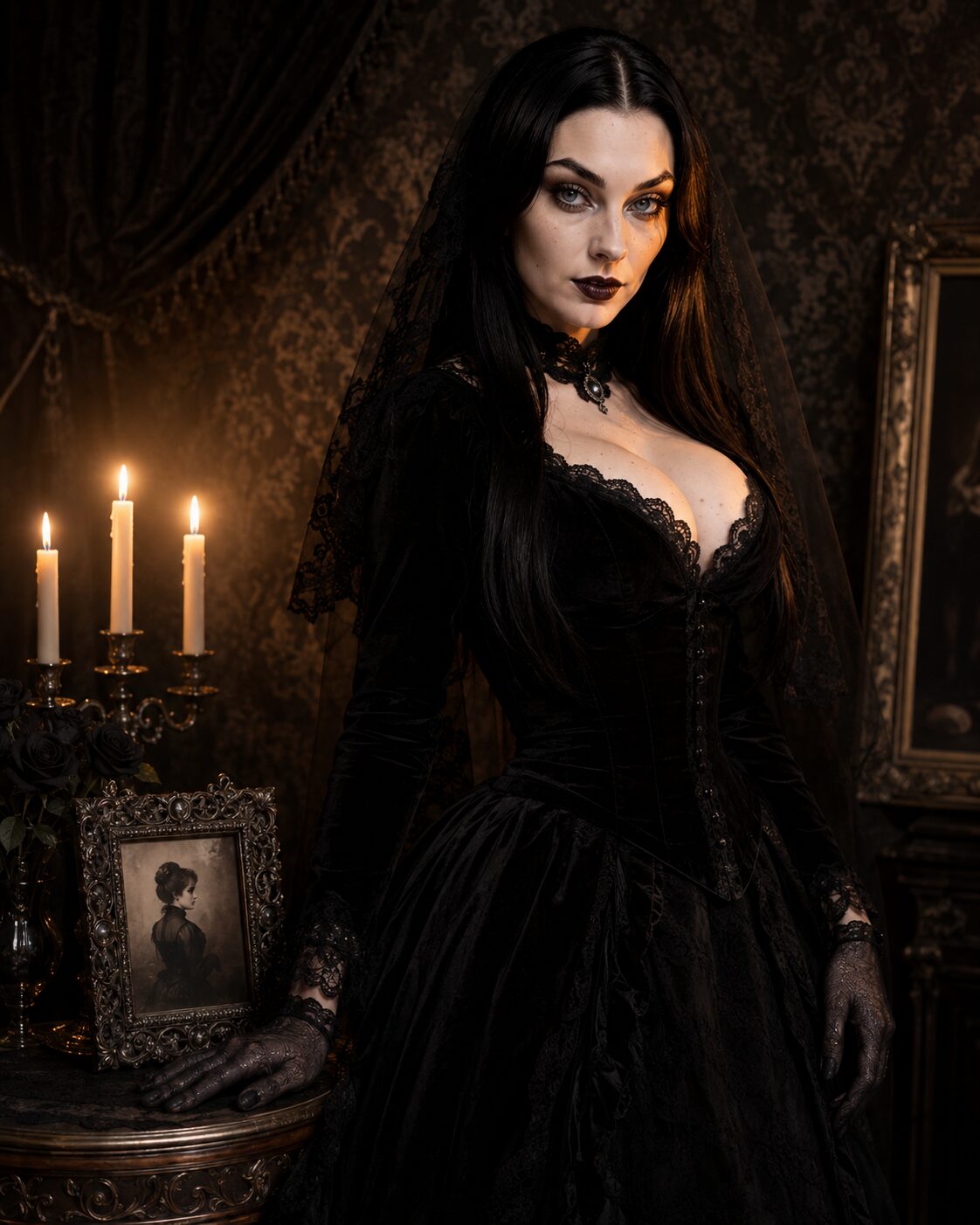
Corset, candlelight, a mourning portrait on the wall — colour physically bothers her now, too bright, too loud. This is not a set she strikes when the shoot ends. It is where she wakes and works and sleeps, every antique chosen because it tells the truth she believes about time.
17 / 20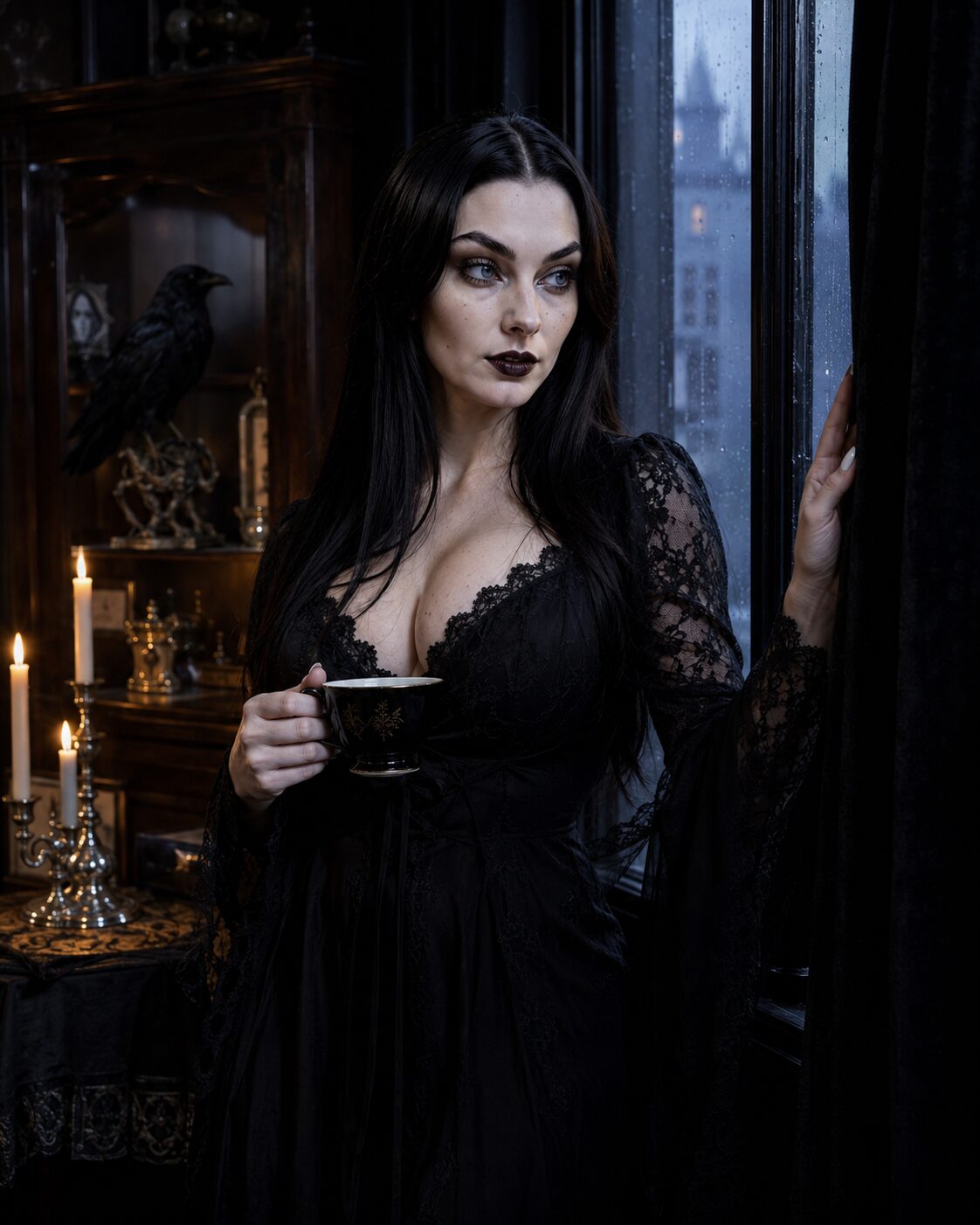
Tea by the window, the grey city behind. She founded a Death Café — monthly gatherings where strangers discuss mortality over tea and cake, life-affirming rather than morbid. Twelve UK cities so far; fifty is the goal. The point was never to be untouchable. It was to build a room where death could be said aloud.
18 / 20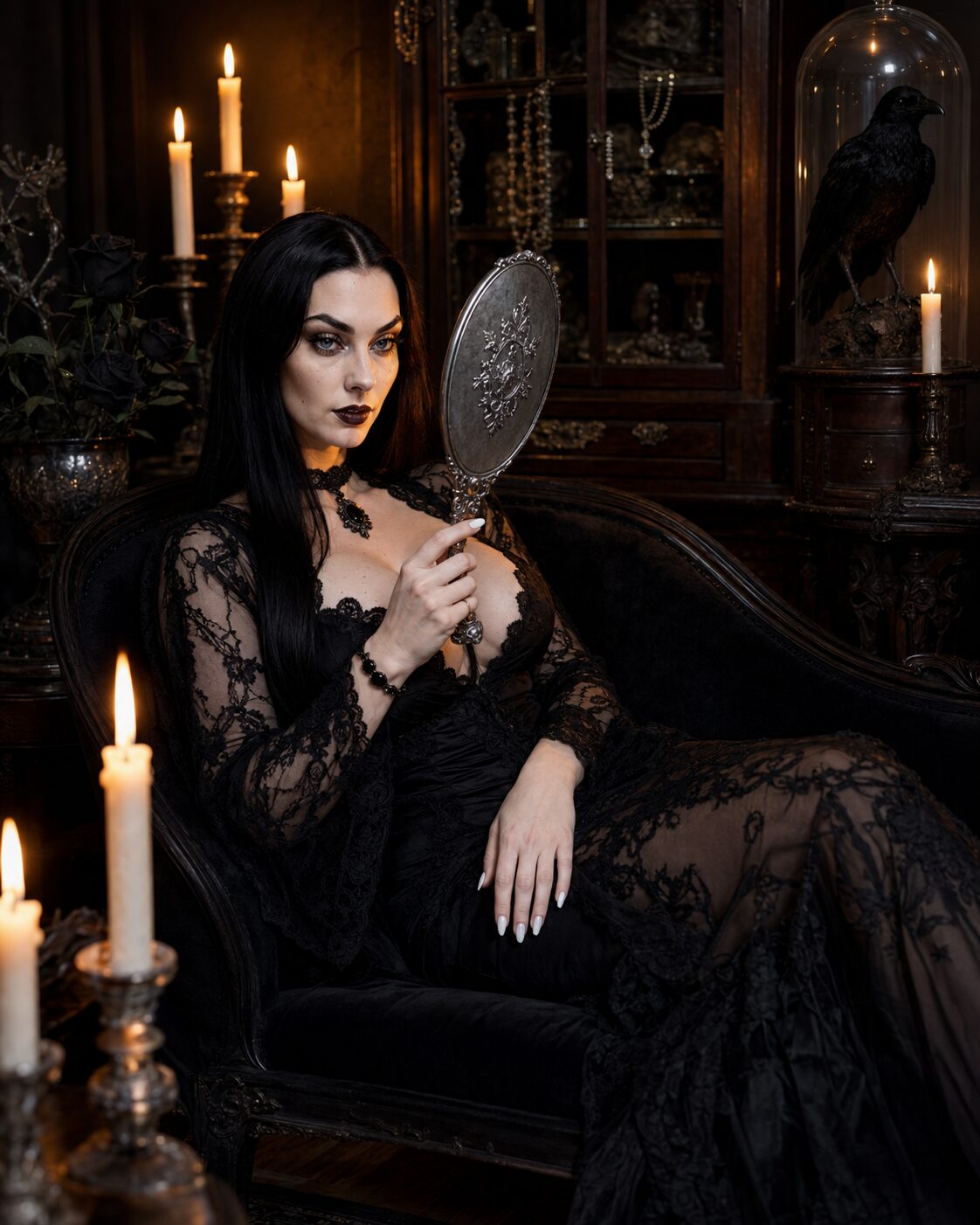
Reclined with an antique hand-mirror, unhurried, wholly at ease in the world she built. At twenty-six a photographer loved shooting his “goth girlfriend” more than knowing her — but you’re my dark muse, he said, when she asked him to stop. She ended it. She is nobody’s muse now. She is the one composing the picture.
19 / 20
No corridor, no candelabra — only the black teacup, the pale hands, the stare that doesn’t look away first. Warm beneath the cold exterior, wickedly funny once a room relaxes, and done apologising for any of it at thirty-one. “Memento mori,” she says. “Remember you will die. Not morbid. Liberating.”
20 / 20PDF Editions
Free · Preview Edition
Requiem
Character profile, Phase 1 & 2 · Free by email
Premium · Complete Uncensored Edition
Requiem
All 5 phases · Extension Pack · Full uncensored · on Fanvue
Full editorials and exclusive content on Fanvue.
Access Exclusive Content