
Valentina Santos

Valentina Santos

"Ink, rhythm, and fire"

São Paulo Tattoo Artist Tropical Ink / Samba Fire
All Models
São Paulo tattoo artist and samba performer. Born between tinta and rhythm, lives there still.

Valentina Santos grew up in Vila Madalena, the neighborhood of murals and botecos, daughter of a self-taught tattooist and a samba school choreography director. There was no choice to make — she was born between ink and rhythm, and by fifteen she was already surpassing her father in tattooing technique. The day he looked at her work and said simply você passou — you passed — was the moment that defined her.

She became rainha de bateria at twenty-two. A photo from that Carnaval went viral — two million people who didn’t know her name couldn’t forget her face. What followed was six months of proposals that wanted the spectacle without the person: the tattooed sensual carnival object, stripped of voice and craft. She accepted two jobs thinking she could control the framing. She couldn’t. She disappeared from social media for a year. When she came back, it was entirely on her terms.

Her studio, Raízes Ink, has a three-month waiting list because what she does to a body looks like it was always destined to be there. The tropical blackwork on her own right arm — heliconias, bromeliads, palms — is the most visible argument for her philosophy: the body is a canvas, the tattoo is a chapter, and together they’re a story that outlasts the person who chose to tell it.

She trains samba six days a week in season with the discipline of an athlete. She cooks Bahian food on Sunday mornings with Gilberto Gil on and the window open. She photographs the samba schools that gentrification is erasing, hundreds of images still without a home.

São Paulo is chaotic, loud, and real. She’s defended it for twenty-eight years. She’d rather be real than beautiful.

Valentina Santos
Ink, rhythm, and fire

São Paulo tattoo artist and samba performer. Born between tinta and rhythm, lives there still.

Spotlit against black, petals suspended, both tattooed arms crossed like a shield she chose. At twenty-two a single Carnival photo reached two million people who couldn’t forget her face and never learned her name. She disappeared for a year and came back with one rule: “You don’t need permission to take up space. You were born taking it.”
On her own terms

Spotlit against black, petals suspended, both tattooed arms crossed like a shield she chose. At twenty-two a single Carnival photo reached two million people who couldn’t forget her face and never learned her name. She disappeared for a year and came back with one rule: “You don’t need permission to take up space. You were born taking it.”

01 / 16
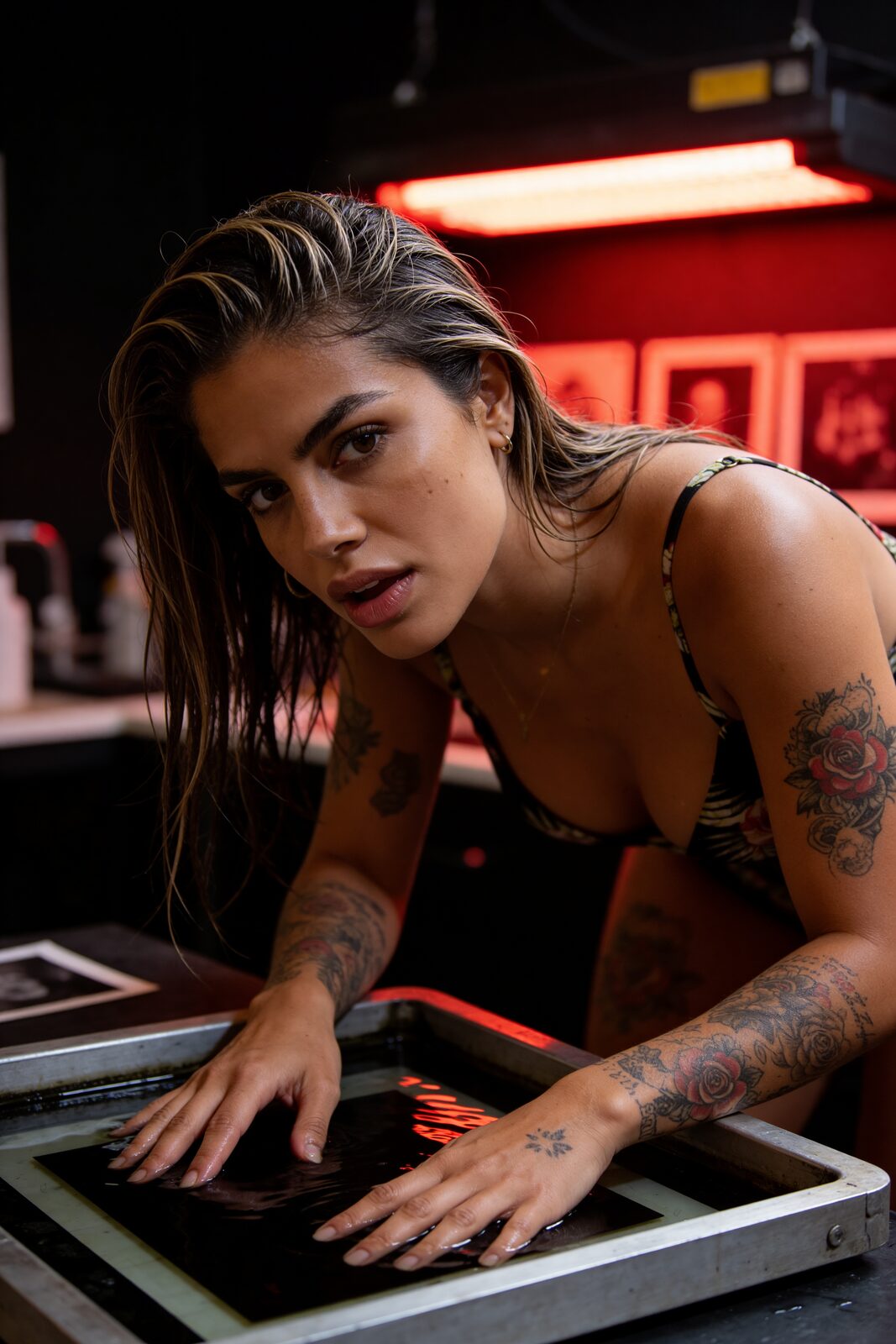
Her own studio, red light, hands moving before she has fully decided — the machine is only the last step of something her eyes settled minutes ago. A three-month waiting list, and not because she’s the most famous: because every piece she sets into a body looks like it was always meant to be there.
Raízes Ink · Lapa

Her own studio, red light, hands moving before she has fully decided — the machine is only the last step of something her eyes settled minutes ago. A three-month waiting list, and not because she’s the most famous: because every piece she sets into a body looks like it was always meant to be there.

02 / 16
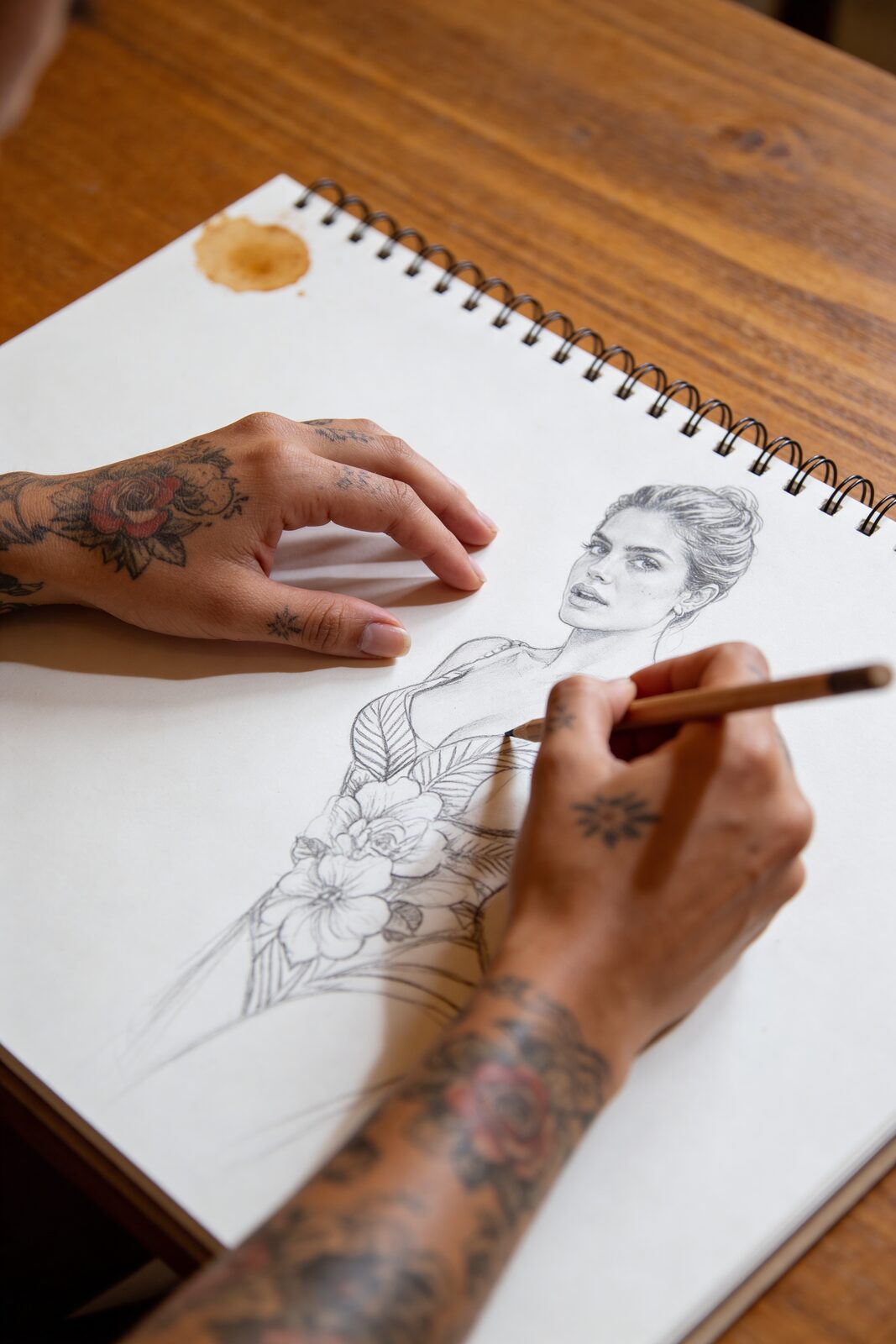
A coffee ring on the page, a rose taking shape in graphite, her own flora sleeve wrapped around the same wrist. Give her a pen and she draws — on napkins, book margins, her own arm — without deciding to. “Every scar I covered with flowers,” she says. “Not to hide it — to make it bloom.”
Her hand thinks alone

A coffee ring on the page, a rose taking shape in graphite, her own flora sleeve wrapped around the same wrist. Give her a pen and she draws — on napkins, book margins, her own arm — without deciding to. “Every scar I covered with flowers,” she says. “Not to hide it — to make it bloom.”

03 / 16

The chair by the window, a notebook, the São Paulo light coming up grey and gold — she takes the sessions that start before dawn, for the quality of silence the rest of the day never has. Her father, Seu Rubens, put the machine in her hand at fifteen. By seventeen she had passed him. He only said “você passou,” and that was everything.
Before the city wakes

The chair by the window, a notebook, the São Paulo light coming up grey and gold — she takes the sessions that start before dawn, for the quality of silence the rest of the day never has. Her father, Seu Rubens, put the machine in her hand at fifteen. By seventeen she had passed him. He only said “você passou,” and that was everything.

04 / 16
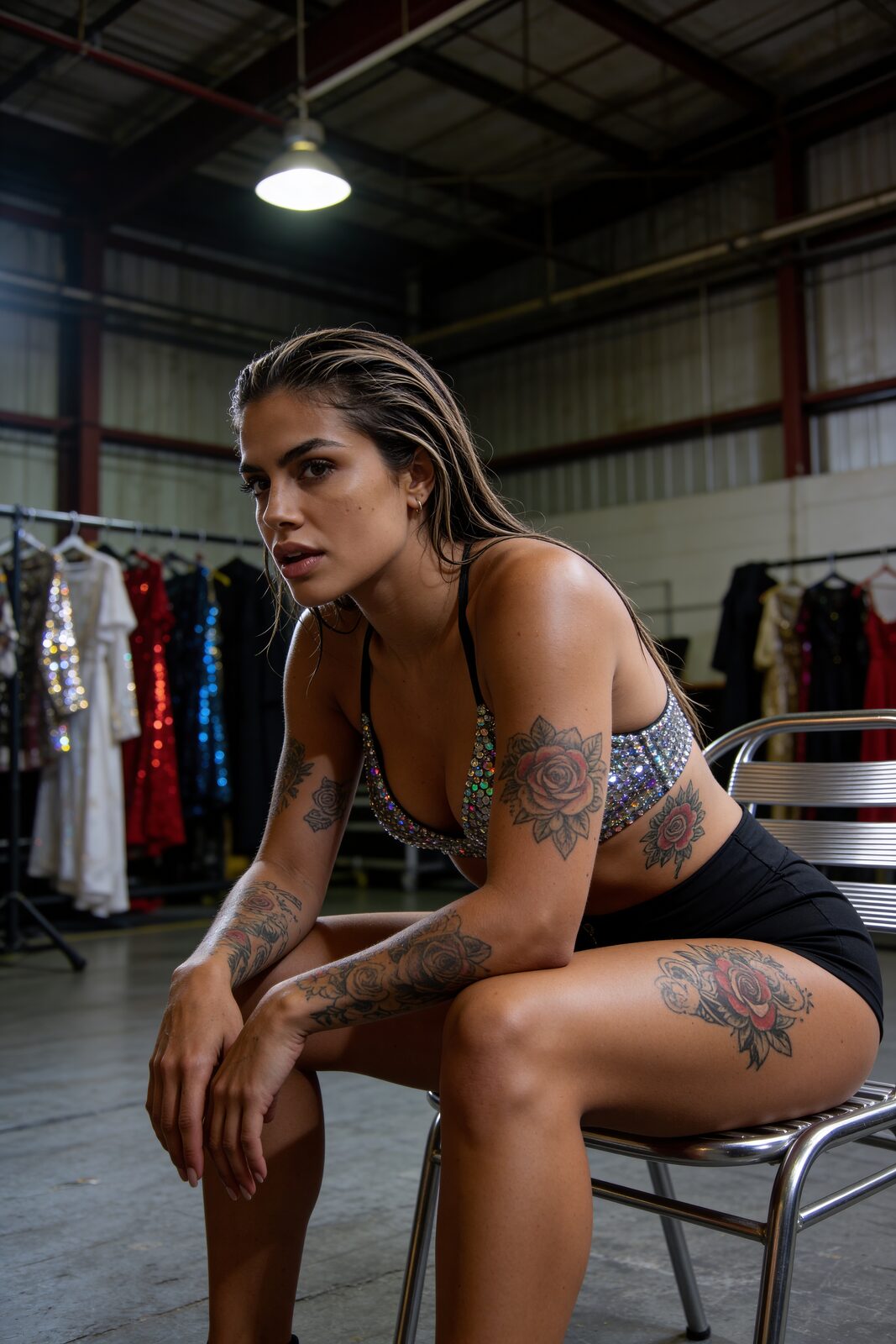
Backstage among the costume racks, the whole archive on display: the blackwork tropical flora up the right arm, the neo-traditional roses up the left, the rose-and-mandala on the thigh she calls her masterpiece. “My body is my portfolio,” she says. “Every tattoo is a chapter.” She started the left sleeve at seventeen; every rose has a story.
Every tattoo, a chapter

Backstage among the costume racks, the whole archive on display: the blackwork tropical flora up the right arm, the neo-traditional roses up the left, the rose-and-mandala on the thigh she calls her masterpiece. “My body is my portfolio,” she says. “Every tattoo is a chapter.” She started the left sleeve at seventeen; every rose has a story.

05 / 16

Thrown back into the flowers, sun on the ink, nothing to prove. She grew up in a culture where the body is celebration, not transgression — she knows hers, tends it, uses it as an instrument. The eroticism reads as natural because to her it is. The same body that tattoos all day dances all night; they were never two different things.
The body as celebration

Thrown back into the flowers, sun on the ink, nothing to prove. She grew up in a culture where the body is celebration, not transgression — she knows hers, tends it, uses it as an instrument. The eroticism reads as natural because to her it is. The same body that tattoos all day dances all night; they were never two different things.

06 / 16

The crown of the Escola Unidos do Madalena, the headdress her mother’s world built. Dona Claudete ran the school; Valentina danced from the age of four — not a hobby, a vocation. At twenty-two she was rainha for the first time. “Samba is not a dance,” she says. “It’s a theology.” Nobody watching the parade imagines the months of 5am rehearsals behind it.
Rainha de bateria

The crown of the Escola Unidos do Madalena, the headdress her mother’s world built. Dona Claudete ran the school; Valentina danced from the age of four — not a hobby, a vocation. At twenty-two she was rainha for the first time. “Samba is not a dance,” she says. “It’s a theology.” Nobody watching the parade imagines the months of 5am rehearsals behind it.

07 / 16

Arms up, feathers everywhere, the whole sambódromo roaring — two seconds of apparent freedom built on an architecture of brutal work. Six days a week in season: choreography like an athlete, rhythm like a musician, presence like theatre. In a country that was robbed of its joy, she says, smiling loud is not naïveté. It’s resistance.
On the avenue

Arms up, feathers everywhere, the whole sambódromo roaring — two seconds of apparent freedom built on an architecture of brutal work. Six days a week in season: choreography like an athlete, rhythm like a musician, presence like theatre. In a country that was robbed of its joy, she says, smiling loud is not naïveté. It’s resistance.

08 / 16

Under the Brazilian colours, in the tropical print, in the middle of the street where Carnival actually lives. Not the tourist postcard — the real thing, complex and political and spiritual. She wants to carry the samba to the places it hasn’t reached, and to document the escolas that gentrification is quietly erasing before they are gone.
Bloco de rua

Under the Brazilian colours, in the tropical print, in the middle of the street where Carnival actually lives. Not the tourist postcard — the real thing, complex and political and spiritual. She wants to carry the samba to the places it hasn’t reached, and to document the escolas that gentrification is quietly erasing before they are gone.

09 / 16
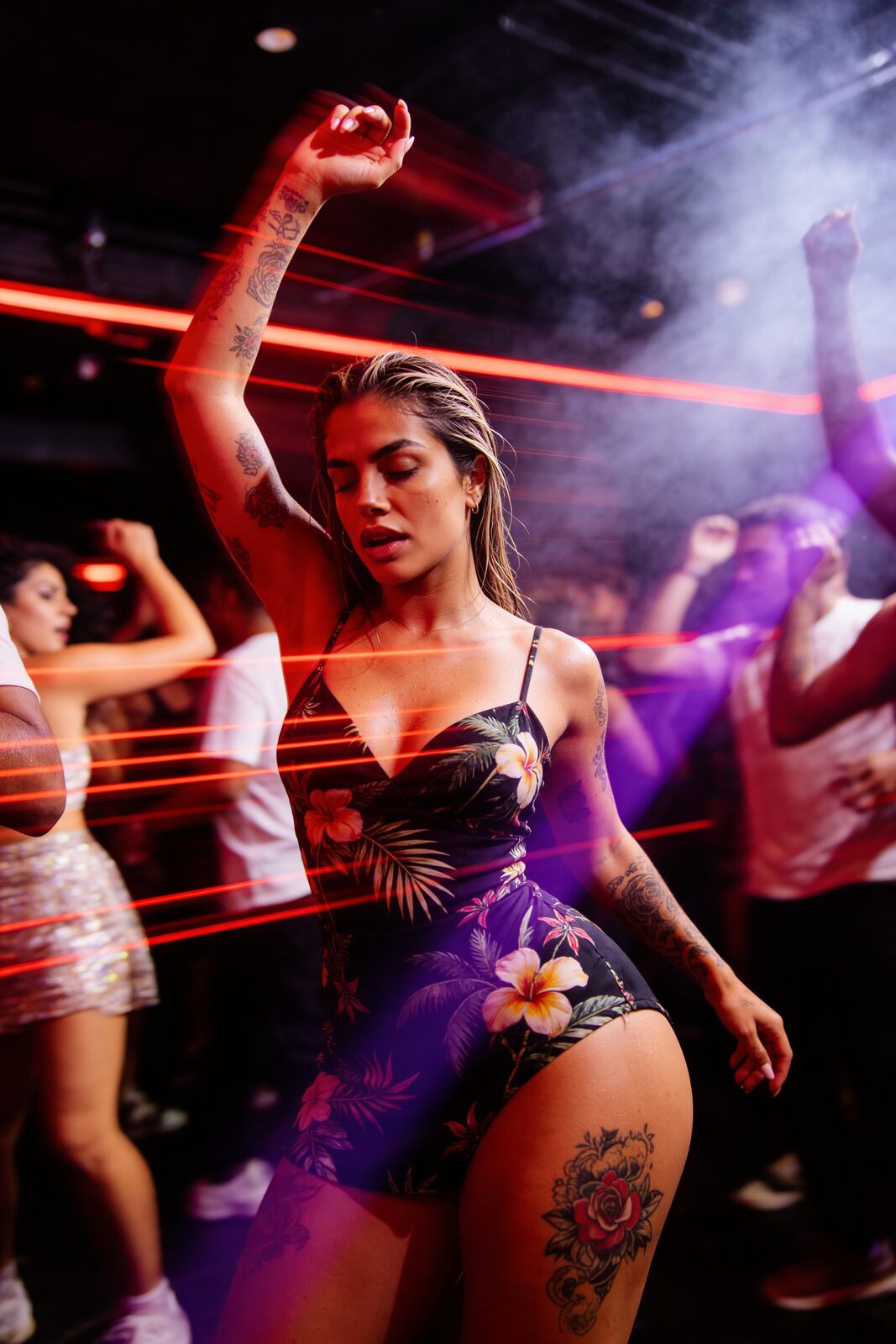
A dark room, light trails, a hibiscus in her dress — samba de raiz, MPB, funk carioca, baião. It irritates her when foreigners think “Brazilian music” means bossa nova. She keeps a two-thousand-song playlist she calls Brasil de verdade, and never wears headphones in the street: she needs to hear the city that feeds her.
Brasil de verdade

A dark room, light trails, a hibiscus in her dress — samba de raiz, MPB, funk carioca, baião. It irritates her when foreigners think “Brazilian music” means bossa nova. She keeps a two-thousand-song playlist she calls Brasil de verdade, and never wears headphones in the street: she needs to hear the city that feeds her.

10 / 16

An old float in a warehouse gone quiet, dust hanging in the light. She photographs the samba schools being pushed out by money and time — hundreds of unpublished frames she doesn’t yet know what to do with, only that they matter. Her book, Raízes, will hold the tattoos and the vanishing schools in one volume. Published in Brazil, she insists. Not for foreigners.
What the city is erasing

An old float in a warehouse gone quiet, dust hanging in the light. She photographs the samba schools being pushed out by money and time — hundreds of unpublished frames she doesn’t yet know what to do with, only that they matter. Her book, Raízes, will hold the tattoos and the vanishing schools in one volume. Published in Brazil, she insists. Not for foreigners.

11 / 16
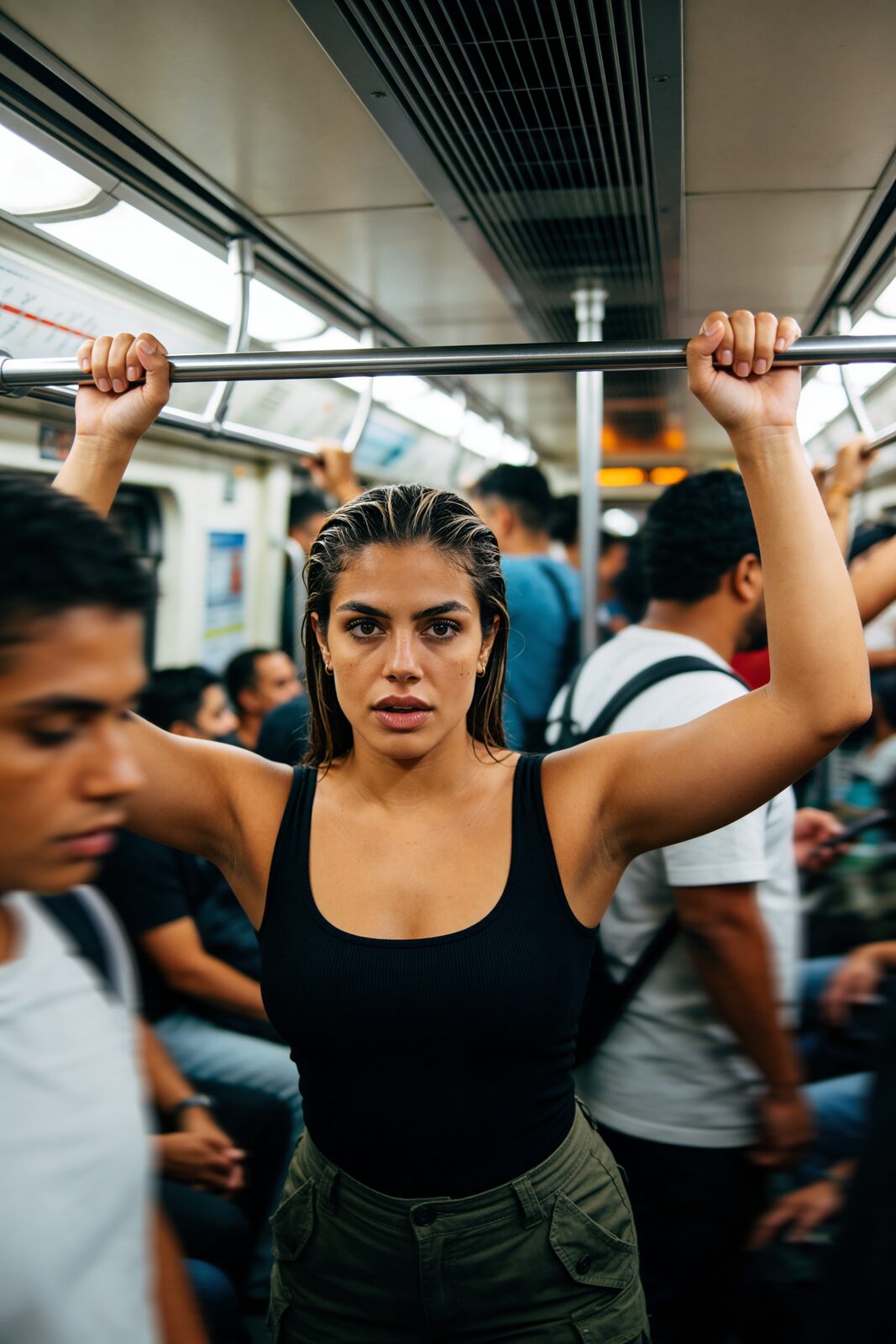
Holding the bar on the São Paulo metro, the city pressing in from every side — chaotic, loud, contradictory, hers. Rio is prettier to outsiders; she defends São Paulo with her nails and her ink. “São Paulo isn’t pretty,” she says. “It’s real. I prefer real.” The noise isn’t something to escape. It’s part of where the work comes from.
Paulistana, sem pedir desculpas

Holding the bar on the São Paulo metro, the city pressing in from every side — chaotic, loud, contradictory, hers. Rio is prettier to outsiders; she defends São Paulo with her nails and her ink. “São Paulo isn’t pretty,” she says. “It’s real. I prefer real.” The noise isn’t something to escape. It’s part of where the work comes from.

12 / 16

A grid of neon, and more than one of her inside it — the reflections she spent years learning to govern. After the viral photo she was “the tattooed girl from Carnival” to strangers: an image, not a person. She took two jobs thinking she could steer it. She couldn’t. Now she is exacting about every frame she approves. “Control your image or someone else will. I learned that the hard way.”
Control your image

A grid of neon, and more than one of her inside it — the reflections she spent years learning to govern. After the viral photo she was “the tattooed girl from Carnival” to strangers: an image, not a person. She took two jobs thinking she could steer it. She couldn’t. Now she is exacting about every frame she approves. “Control your image or someone else will. I learned that the hard way.”

13 / 16
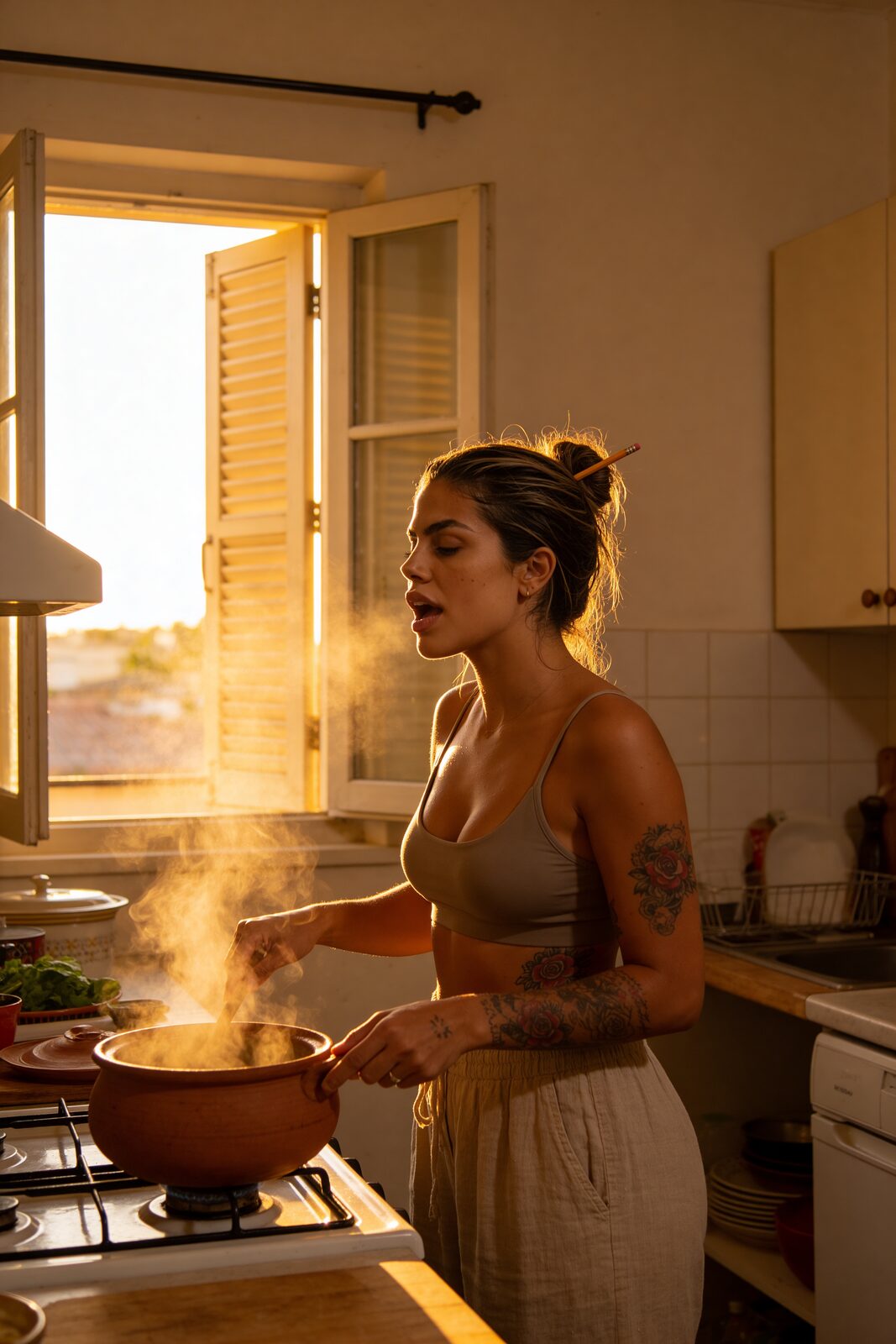
Sunday in the Lapa apartment, a clay pot on the flame, steam and morning light — moqueca, acarajé, vatapá, the Bahian recipes from her maternal grandmother. Gilberto Gil on, window open, four hours at the stove. It is the one thing she does with no audience and no performance, she says. Only the process.
Domingo · no performance

Sunday in the Lapa apartment, a clay pot on the flame, steam and morning light — moqueca, acarajé, vatapá, the Bahian recipes from her maternal grandmother. Gilberto Gil on, window open, four hours at the stove. It is the one thing she does with no audience and no performance, she says. Only the process.

14 / 16

The tide out, the light going — the one frame where the fire banks down. Miami and Berlin have offered her studio residencies; part of her wants to know who Valentina Santos is in another language, another city. The rest is terrified that if she goes, the version of her that exists only in São Paulo’s specific chaos gets lost on the way. She’s still making peace with one idea: that she can expand without vanishing.
Without losing herself

The tide out, the light going — the one frame where the fire banks down. Miami and Berlin have offered her studio residencies; part of her wants to know who Valentina Santos is in another language, another city. The rest is terrified that if she goes, the version of her that exists only in São Paulo’s specific chaos gets lost on the way. She’s still making peace with one idea: that she can expand without vanishing.

15 / 16
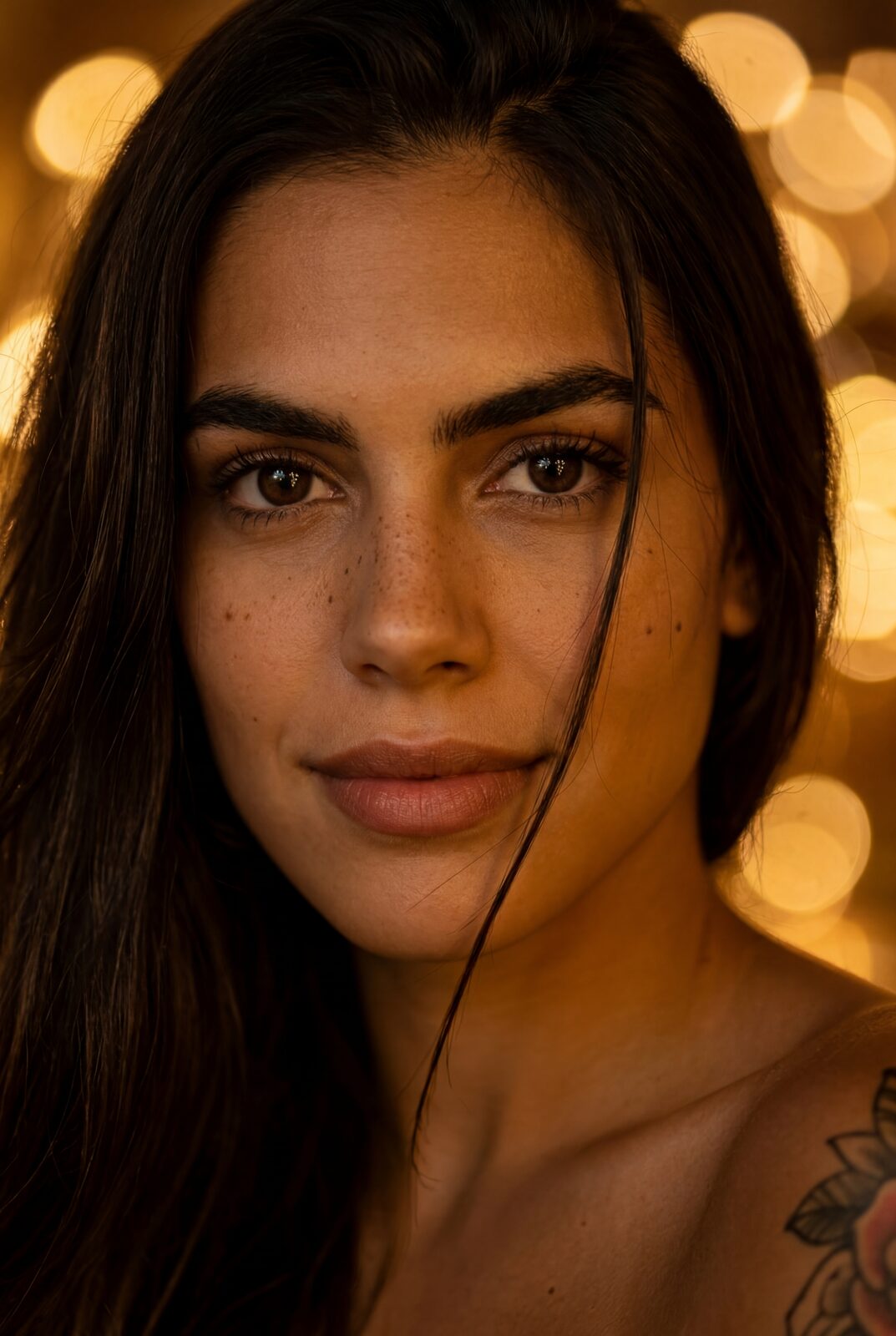
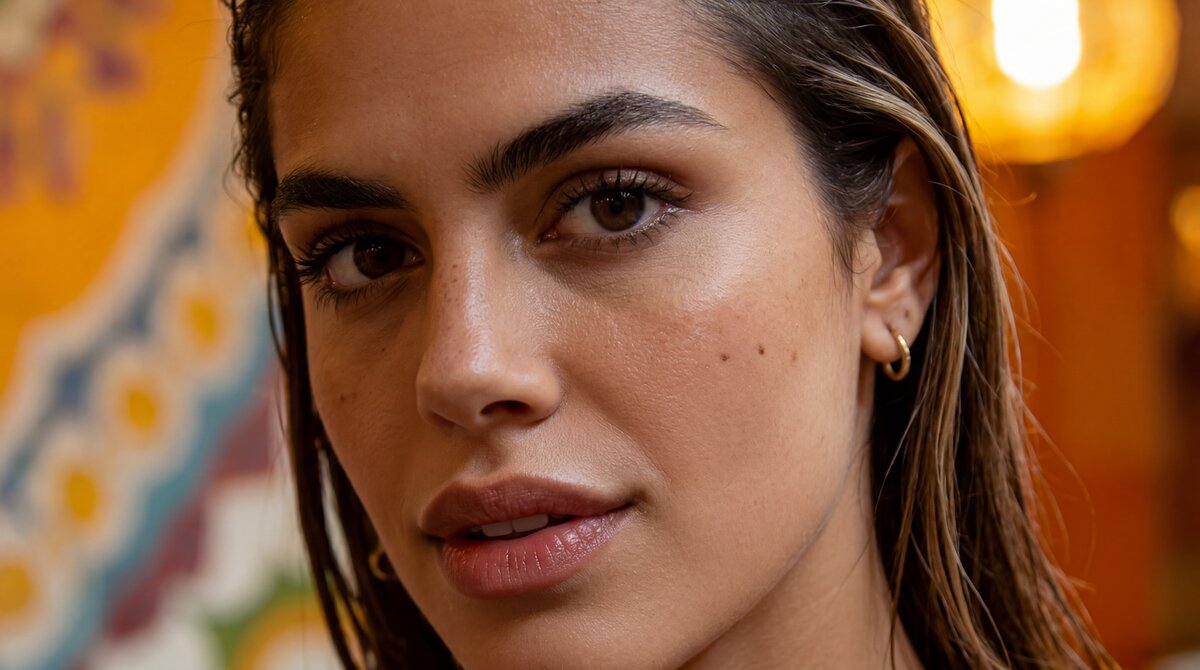
No costume, no crowd, no neon — just the face, the beauty mark under the left eye, the gaze that measures you before it decides to smile. She was an image before she was a person to the world; everything since has been her building, on purpose, exactly who Valentina Santos is. She isn’t chasing fame. She’s chasing the thing that outlasts it.
Inesquecível

No costume, no crowd, no neon — just the face, the beauty mark under the left eye, the gaze that measures you before it decides to smile. She was an image before she was a person to the world; everything since has been her building, on purpose, exactly who Valentina Santos is. She isn’t chasing fame. She’s chasing the thing that outlasts it.

16 / 16
“I don’t want to be famous. I want to be unforgettable. Those are different things.” 16 frames · São Paulo

Free · Preview Edition

Rainha

Character profile, Phase 1 & 2 · Free by email

Get Free PDF

Premium · Complete Uncensored Edition

Rainha

All 5 phases · Extension Pack · Full uncensored · on Fanvue

Complete Edition

See more of Valentina Santos

Full editorials and exclusive content on Fanvue.

Access Exclusive Content

The Collective Speaks

Be the first to know.

Editorials. Drops. Confessions. First.

No spam. Unsubscribe anytime.